RMF Logo

Article filters

Search Papers:

Searches prior to 2023, No. 3. In the section Volumes 30 - 41 (2012 - 2023)
Epidemiological etiology of <em>Erysiphe</em> sp. and putative viral and phytoplasma-like symptoms in Ayocote bean (<em>Phaseolus coccineus</em>). Figura 2 - Morphological and genomic identification of powdery mildew in Ayocote bean (<em>Phaseolus coccineus</em>). A. hyaline, ovoid to ellipsoid conidia; B-C. cylindrical and erect conidiophores; D-F. germinating conidia; G. Amplification of the internal transcribed spacer region (ITS) of nuclear ribosomal DNA (~500 bp) of five samples of cenicilla DNA (1-5), two positive PCR controls (+) belonging to the ITS region of <em>Alternaria</em> and <em>Fusarium</em> genera, 1 kb molecular weight marker (M) plus Invitrogen and negative PCR control (-); H. phylogenetic tree performed by Maximum Likelihood (ML) and the Hasegawa-Kishino-Yano substitution model with 1000 Bootstrap replications, based on ITS region of fungal sequences belonging to Erysiphe genus (Table 2). The study sequences are: FAC6, FAC7, FAC8 and FAC9 (red dot). Oidium sp. (accession number: EU377475) was included as outgroup

Latest Papers

  • Vol. 2026, 44(2)
  • Scientific Article

In vitro and in planta effect of silicon and phosphites in control of Fusarium oxysporum f. sp. lycopersici causing wilting of tomato

byMagda Rocío Gómez Marroquín*, Sandra L Carmona, Diana Burbano David, Andrea del Pilar Villarreal, Mauricio Soto Suárez, Adriana González Almario

Received: 15/June/2025 – Published: 29/April/2026
DOI: https://doi.org/10.18781/R.MEX.FIT.2401-3

Abstract Background/Objective. Bioactive substances such as phosphites and silicon present a promising alternative for management of vascular wilt of tomato, due to their potential to inhibit pathogen growth and to induce plant defense mechanisms. The objective of this study was to evaluate the effect of three phosphite sources and a source of silicon on isolate Fol59 of Fusarium oxysporum f. sp. lycopersici race 2 via in vitro and in planta assays.

Materials and Methods. In in vitro conditions, percentage of radial growth inhibition (PRGI) of isolate Fol59 was determined in PDA medium supplemented with each bioactive substance in concentrations between 10 and 20 000 ppm following a completely randomized design (4 × 9) with four treatments and nine different concentrations; five technical replicates and three biological replicates. In in planta conditions, the area under the disease progress curve (AUDPC) and efficacy percentage were evaluated with a completely randomized design (4 × 2) with four treatments and two different concentrations under four experimental conditions: control, inoculated control, treatments without inoculation and inoculated treatments. 20 experimental units and three biological replicates were used per treatment.

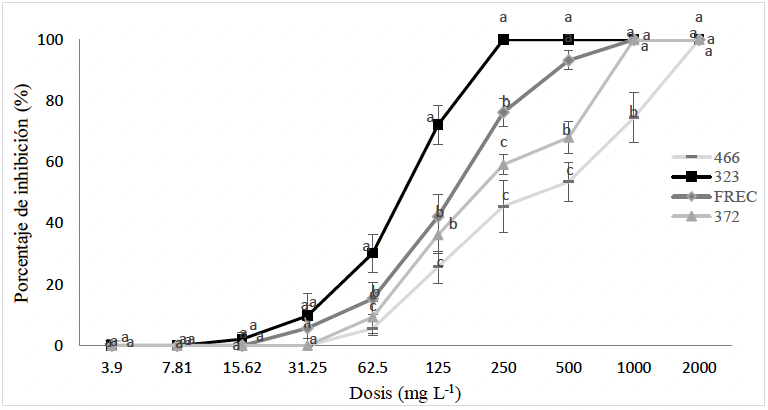
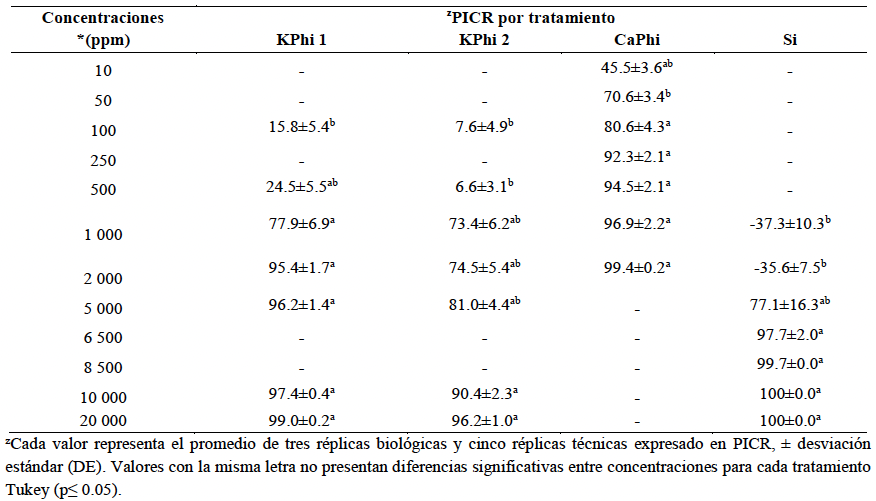
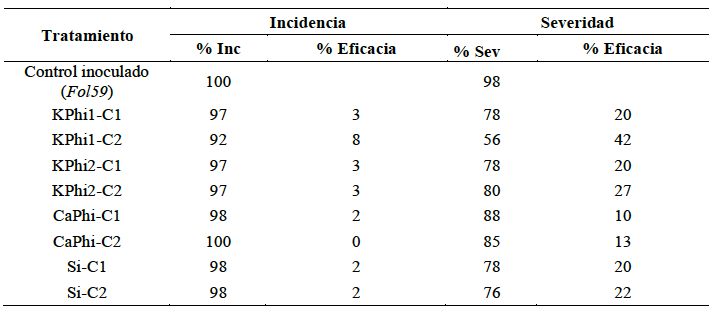
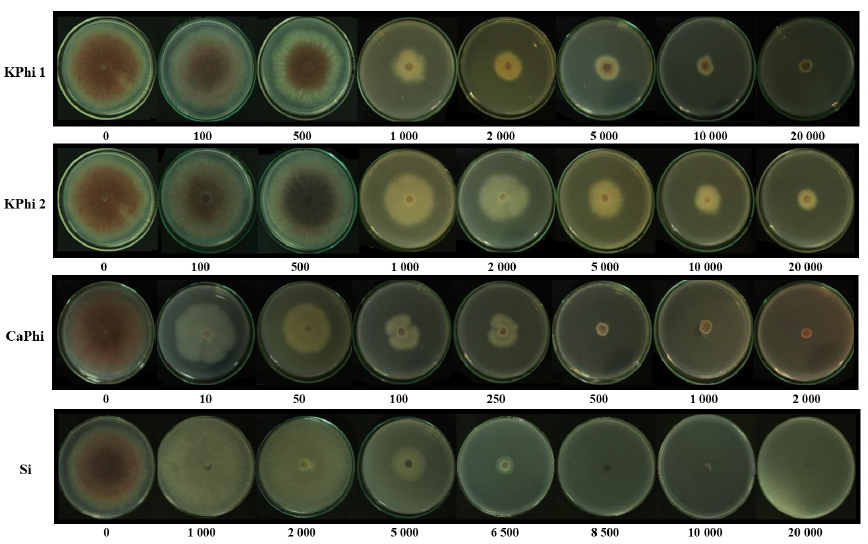
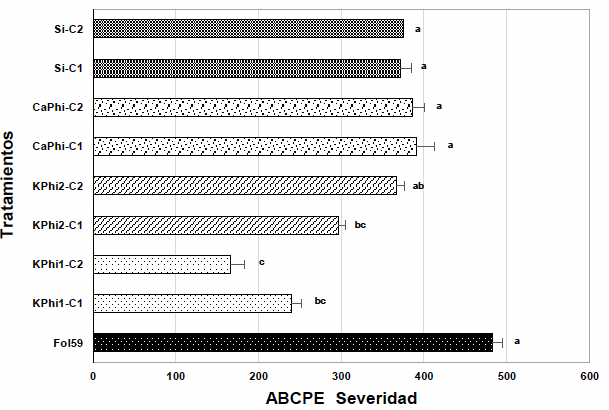
Results. After seven days, the bioactive substances reduced radial growth of the fungus between 70 and 100% with significant differences among the concentrations. The largest inhibition was registered with silicon at 10 000 ppm (100%) followed by calcium phosphite at 2 000 ppm (99%). Fourteen days post inoculation, in in planta assays, the control showed 100% incidence and 98% severity. However, the potassium phosphite treatment (KPhi1) at 2 000 ppm reduced severity to 56%, which represents a 42% efficacy against the control.

Conclusion. Phosphites and silicon showed inhibitory effect on mycelial growth of the fungus under in vitro conditions. In in planta assays, potassium phosphite at 2 000 ppm was the most effective treatment, reducing the severity of vascular wilt of tomato caused by Fol59.

Show Figures and/or Tables
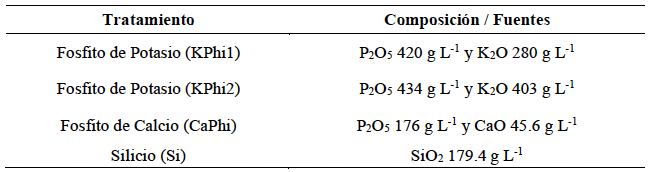
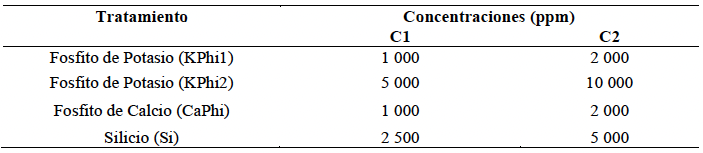
Table 1. Evaluated bioactive substances in <em>in vitro</em> and <em>in planta</em> assays in tomato (<em>Solanum lycopersicum</em>).
Table 1. Evaluated bioactive substances in in vitro and in planta assays in tomato (Solanum lycopersicum).
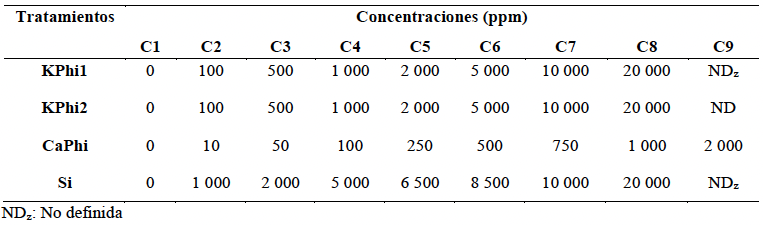
Table 2. Concentration of bioactive substances evaluated against <em>Fusarium oxysporum</em> f. sp. <em>lycopersici</em> (<em>Fol59</em>) in <em>in vitro</em> conditions.
Table 2. Concentration of bioactive substances evaluated against Fusarium oxysporum f. sp. lycopersici (Fol59) in in vitro conditions.
Table 3. Concentrations of bioactive substances evaluated in tomato plants under <em>Fusarium oxysporum</em> f. sp. <em>lycopersici</em> inoculated and non-inoculated conditions.
Table 3. Concentrations of bioactive substances evaluated in tomato plants under Fusarium oxysporum f. sp. lycopersici inoculated and non-inoculated conditions.
Table 4. Percentage of radial growth inhibition (PRGI) of <em>Fusarium oxysporum</em> f. sp. <em>lycopersici</em> using phosphites and silicon (KPhi1, KPhi2, CaPhi and Si) at different concentrations under <em>in vitro</em> conditions.
Table 4. Percentage of radial growth inhibition (PRGI) of Fusarium oxysporum f. sp. lycopersici using phosphites and silicon (KPhi1, KPhi2, CaPhi and Si) at different concentrations under in vitro conditions.
Table 5. Incidence and severity percentages caused for<em> Fusarium oxysporum</em> f. sp. <em>lycopersici</em> (<em>Fol59</em>) in tomato plants 14 days after inoculation (dai).
Table 5. Incidence and severity percentages caused for Fusarium oxysporum f. sp. lycopersici (Fol59) in tomato plants 14 days after inoculation (dai).
Figure 1. Effect of different concentrations of phosphites and silicon on mycelial growth of <em>Fol59</em> after seven days of incubation.
Figure 1. Effect of different concentrations of phosphites and silicon on mycelial growth of Fol59 after seven days of incubation.
Figure 2. Area under disease progression curve (AUDPC) 14 days after inoculation, expressed as severity in tomato plants previously treated with bioactive substances (KPhi, CaPhi and Si) and inoculated with isolate <em>Fol59</em>. Bars with the same letter do not show significant differences according to the Tukey test (p ≤ 0.05).
Figure 2. Area under disease progression curve (AUDPC) 14 days after inoculation, expressed as severity in tomato plants previously treated with bioactive substances (KPhi, CaPhi and Si) and inoculated with isolate Fol59. Bars with the same letter do not show significant differences according to the Tukey test (p ≤ 0.05).
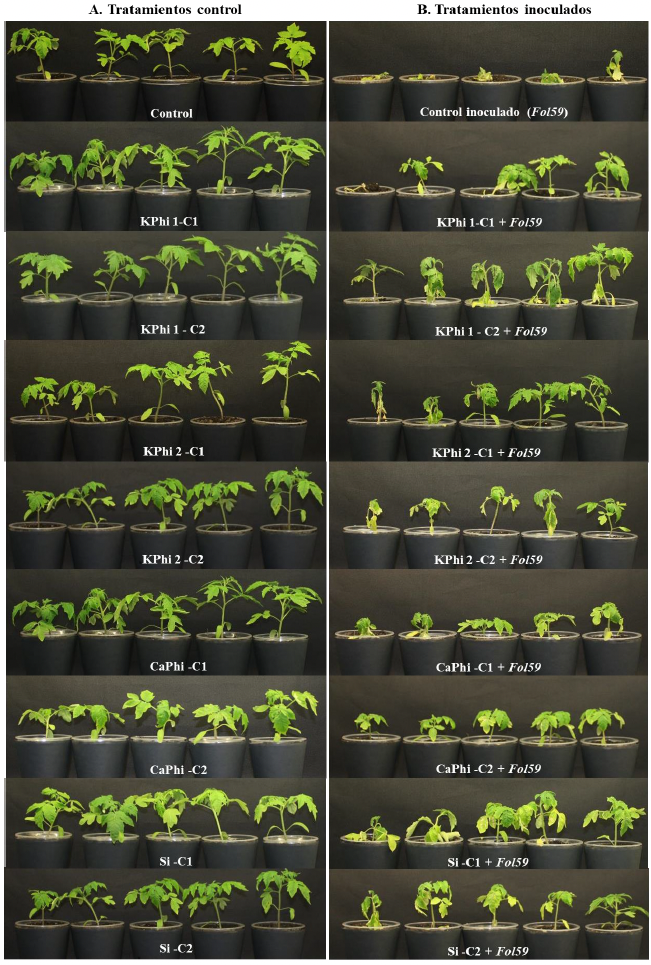
Figure 3. Symptoms of vascular wilting in tomato plants 14 days after inoculation (dai). A) Non-inoculated plants, including control and treatments with bioactive substances; B) <em>Fol59</em> inoculated plants, including inoculated control and treatments with bioactive substances.
Figure 3. Symptoms of vascular wilting in tomato plants 14 days after inoculation (dai). A) Non-inoculated plants, including control and treatments with bioactive substances; B) Fol59 inoculated plants, including inoculated control and treatments with bioactive substances.
  • Vol. 2026, 44(2)
  • Phytopathological Note

Potential antagonist of native rhizobacteria of Parkinsonia aculeata on Fusarium spp. associated with native maize varieties from Bajío, Mexico

byLeandris Argentel Martínez, Ofelda Peñuelas Rubio*, Francisco Cervantes Ortíz, Joe Luis Arias Moscoso, Francisco Cadena Cadena, Pamela Romo Rodríguez, Lorenzo Pérez López, Rosario Alicia Fierro Coronado

Received: 15/January/2026 – Published: 29/April/2026
DOI: https://doi.org/10.18781/R.MEX.FIT.2601-2

Abstract Background/Objective. The genus Fusarium comprises some of the most important phytopathogenic fungi affecting maize crops. Fusarium cause diseases such as root, stalk, and ear rot, which negatively impact the crop's agricultural productivity. In the search for agrobiotechnological alternatives for controlling this fungus, this study was aimed to evaluate the antagonistic potential of Parkinsonia aculeata rhizobacteria against Fusarium spp. strains associated with native maize varieties from the Bajío region of Mexico.

Experimental development. Two strains of Fusarium spp. (MC-03 and MC-05), isolated from roots of native maize varieties from the Bajío region of Mexico, exhibiting Fusarium wilt symptoms, were used. These fungi were tested in vitro against nine rhizobacteria of P. aculeata: Enterobacter cloacae (BA1), Priestia megaterium (BA4 and BA-7B), Sinomonas halotolerans (BA10-B), Staphylococcus warneri (BP5), P. endophytica (BP6), Bacillus subtilis (TP1 and TP2), and S. hominis (TM6). Microscopic and macroscopic characterization of the fungal strains and biochemical analysis of the rhizobacteria were performed. Radial growth inhibition of the fungal isolates was determined by triplicate dual fungus-rhizobacteria confrontations. A completely randomized design was used, analyzing the data obtained in the STATISTICA software using an ANOVA based on a linear model of fixed effects and a mean comparison test by DMS (p>0.05).

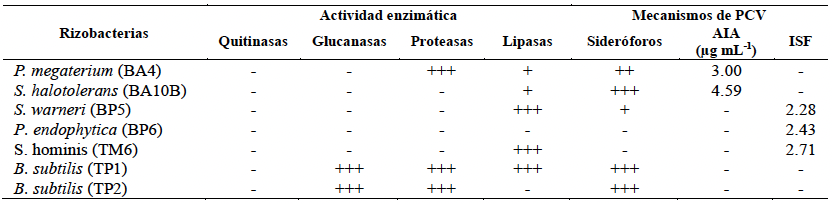
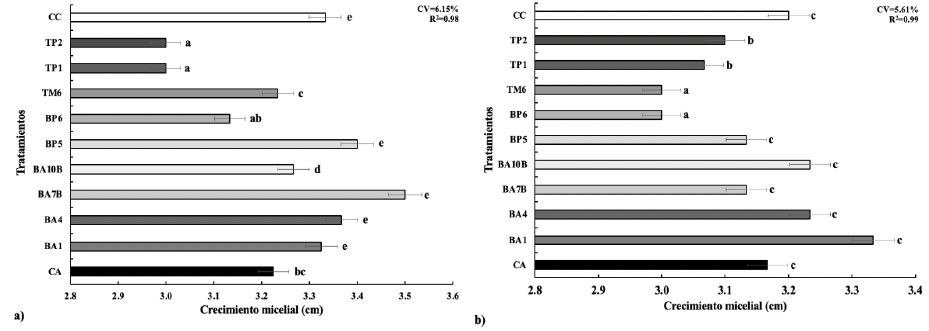
Results. With the exception of P. endophytica (BP6), all rhizobacteria exhibited enzymatic activity related to fungal antagonism mechanisms. B. subtilis (TP1) produced glucanases, lipases, and proteases. Microscopic and macroscopic characterization of the fungal strains indicated that they belong to Fusarium spp. In the rhizobacteria-MC-03 confrontation, the B. subtilis bacterial strains (TP1 and TP2) were statistically similar and achieved the greatest inhibition of mycelial growth (23%). With the fungal strain MC-05, P. endophytica (BP6) and S. hominis (TM6) were statistically superior to the other rhizobacteria in inhibiting mycelial growth (17%), followed by the two B. subtilis strains (TP1 and TP2), which inhibited 10% and 17%, respectively.

Conclusion. There was a significant variability in the mycelial growth response of the fungi to rhizobacteria. B. subtilis (TP1 and TP2), S. hominis (TM6), and P. endophytica (BP6) exhibited an antagonistic effect, inhibiting the mycelial growth of Fusarium spp. strains by up to 23% compared to the absolute and commercial controls. This study establishes the preliminary scientific basis for obtaining a biofungicide with specific inhibitory capabilities against the fungi studied.

Show Figures and/or Tables
Table 1. Biochemical characterization of rhizobacteria isolated from palo verde (<em>Parkinsonia aculeata</em>).
Table 1. Biochemical characterization of rhizobacteria isolated from palo verde (Parkinsonia aculeata).
Figure 1. Diagram of the dual fungus-rhizobacteria confrontation assay. a) Distribution of microorganisms in the Petri dish; b-c) Macroscopic characteristics of the nine bacteria [<em>E. cloacae</em> (BA1), <em>P. megaterium</em> (BA4 and BA7B), <em>S. halotolerans</em> (BA10B), <em>S. warneri</em> (BP5), <em>P. endophytica</em> (BP6), <em>S. hominis</em> (TM6), <em>B. subtilis</em> (TP1 and TP2)] and two fungi (MC-03 and MC-05), respectively.
Figure 1. Diagram of the dual fungus-rhizobacteria confrontation assay. a) Distribution of microorganisms in the Petri dish; b-c) Macroscopic characteristics of the nine bacteria [E. cloacae (BA1), P. megaterium (BA4 and BA7B), S. halotolerans (BA10B), S. warneri (BP5), P. endophytica (BP6), S. hominis (TM6), B. subtilis (TP1 and TP2)] and two fungi (MC-03 and MC-05), respectively.
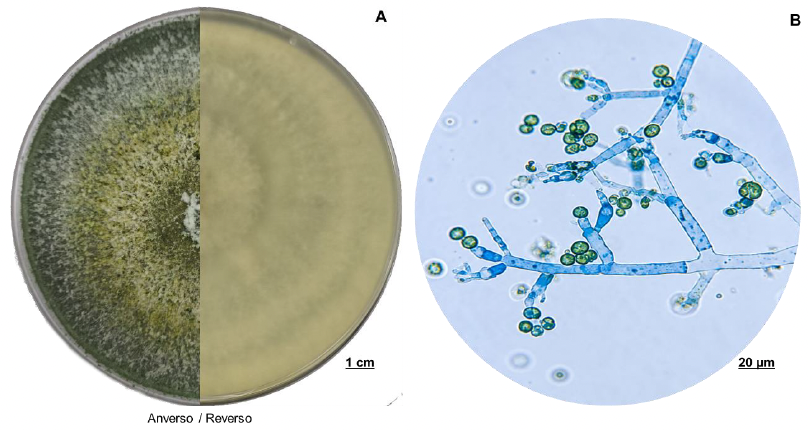
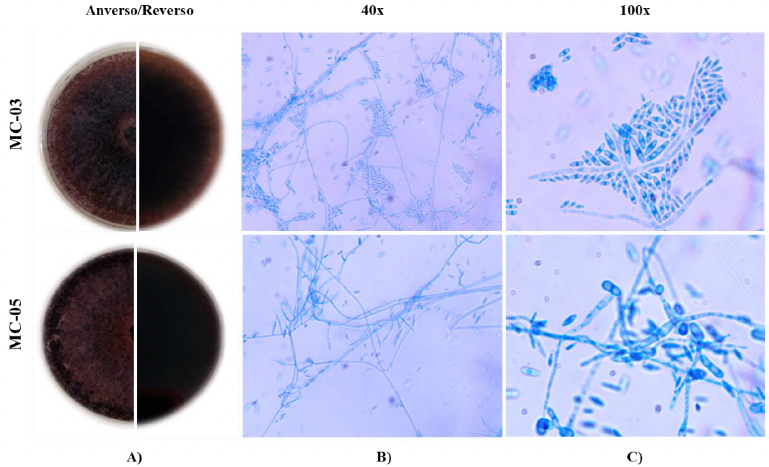
Figure 2. Morphological characterization of <em>Fusarium</em> fungal strains. A) Macroscopic characteristics of the fungal strains: front (top) and back (bottom) views of Petri dishes with PDA medium 10 days after sowing; B and C) Mycelial and conidial structures observed by optical microscopy at 40 and 100X (with immersion oil), from microculture at 5 days after sowing and stained with lactophenol blue (Riddell, 1950).
Figure 2. Morphological characterization of Fusarium fungal strains. A) Macroscopic characteristics of the fungal strains: front (top) and back (bottom) views of Petri dishes with PDA medium 10 days after sowing; B and C) Mycelial and conidial structures observed by optical microscopy at 40 and 100X (with immersion oil), from microculture at 5 days after sowing and stained with lactophenol blue (Riddell, 1950).
Figure 3. Mycelial growth exhibited by the <em>Fusarium</em> spp. strains MC-03 (a) and MC-05 (b) during dual confrontations with antagonistic bacteria. The treatments are shown on the Y-axis: CA: absolute control; CC: commercial control; antagonistic bacteria: BA1 (<em>E. cloacae</em>), BA4 and BA7B (<em>P. megaterium</em>), BA10B (<em>Sinomonas halotolerans</em>), BP5 (<em>S. warneri</em>), BP6 (<em>P. endophytica</em>), TM6 (<em>S. hominis</em>), TP1 and TP2 (<em>B. subtilis</em>).
Figure 3. Mycelial growth exhibited by the Fusarium spp. strains MC-03 (a) and MC-05 (b) during dual confrontations with antagonistic bacteria. The treatments are shown on the Y-axis: CA: absolute control; CC: commercial control; antagonistic bacteria: BA1 (E. cloacae), BA4 and BA7B (P. megaterium), BA10B (Sinomonas halotolerans), BP5 (S. warneri), BP6 (P. endophytica), TM6 (S. hominis), TP1 and TP2 (B. subtilis).
  • Vol. 2026, 44(2)
  • Phytopathological Note

Detection of a tentative alphanucleorhabdovirus infecting Carica papaya in Costa Rica

byLaura Garita Salazar, William Villalobos Muller, Mauricio Montero Astúa, Antonio Bogantes Arias, Teresita Coto Morales, Izayana Sandoval Carvajal, Lisela Moreira Carmona*

Received: 11/February/2026 – Published: 29/April/2026
DOI: https://doi.org/10.18781/R.MEX.FIT.2602-3

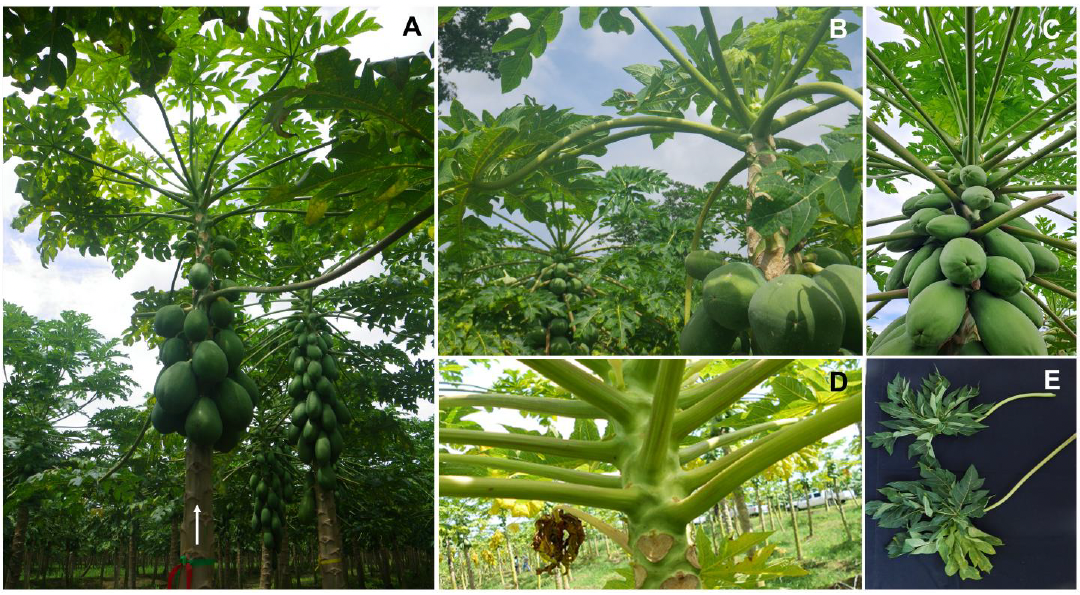
Abstract Background/Objective. Foliar chlorosis, short internodes, and curved petioles with purple streaks were observed in papaya (Carica papaya) crops (North and Atlantic regions) in Costa Rica since 2014. Identification of a putative plant virus associated with these symptoms was the aim of this research.

Experimental development. Plant material was tested by ELISA (four plant viruses and potyviruses group), transmission electron microscopy (TEM), RT-PCR (degenerate primers for plant viruses), sequencing and phylogenetics.

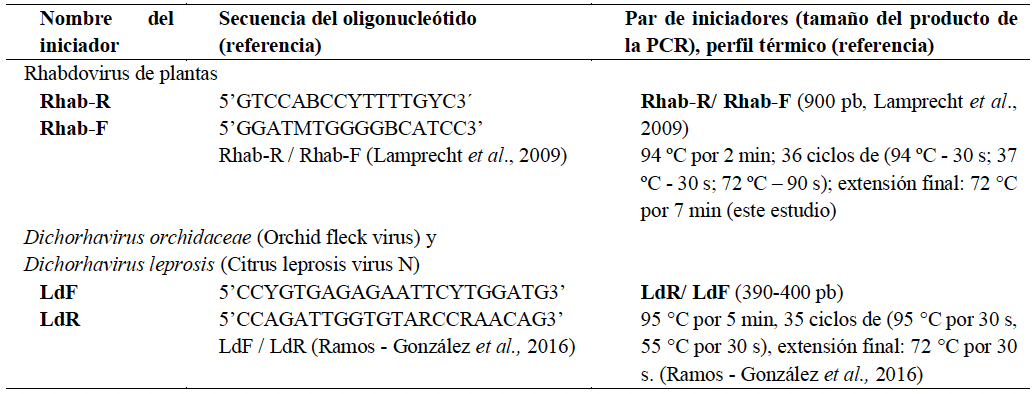
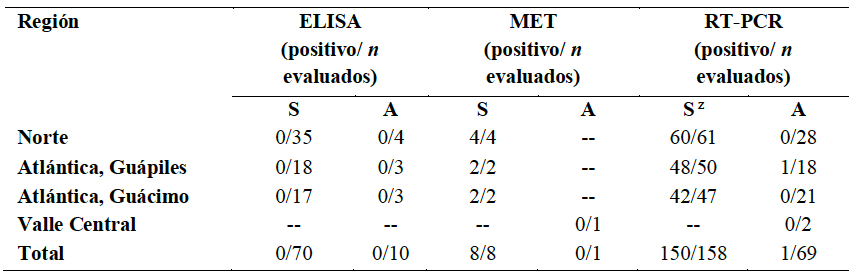
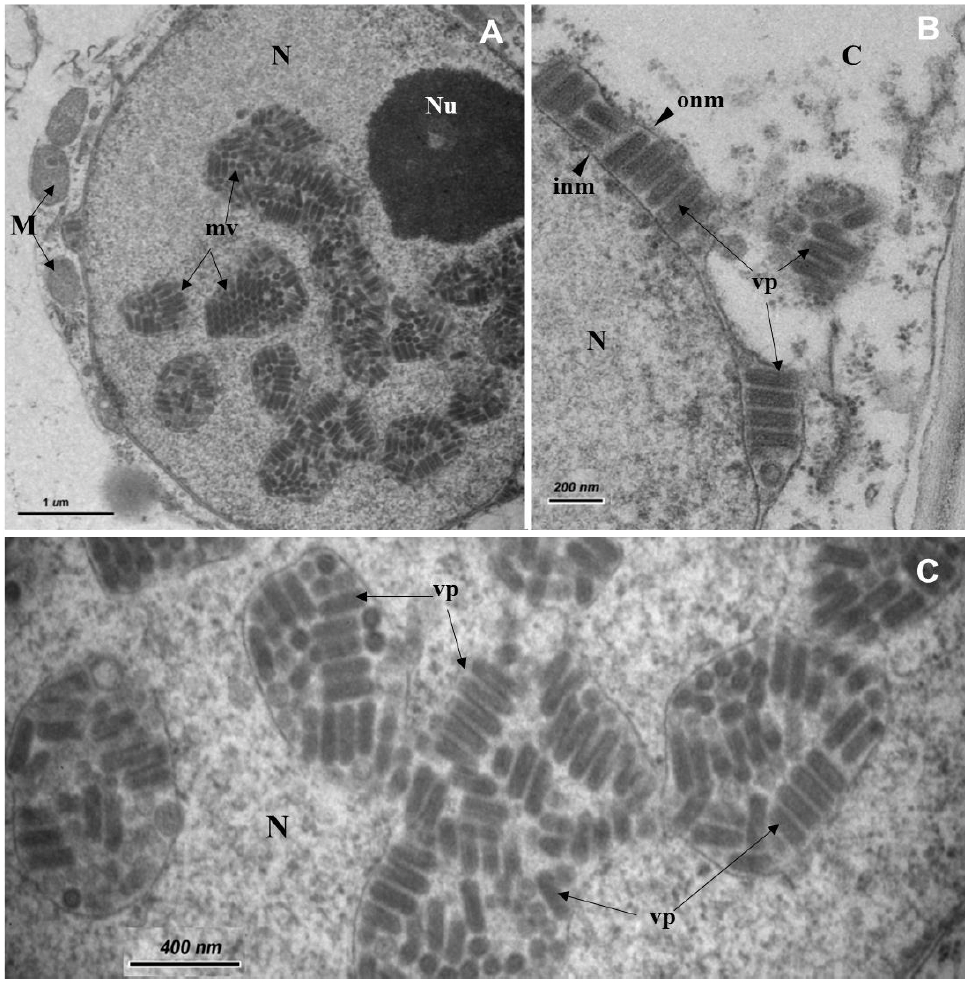
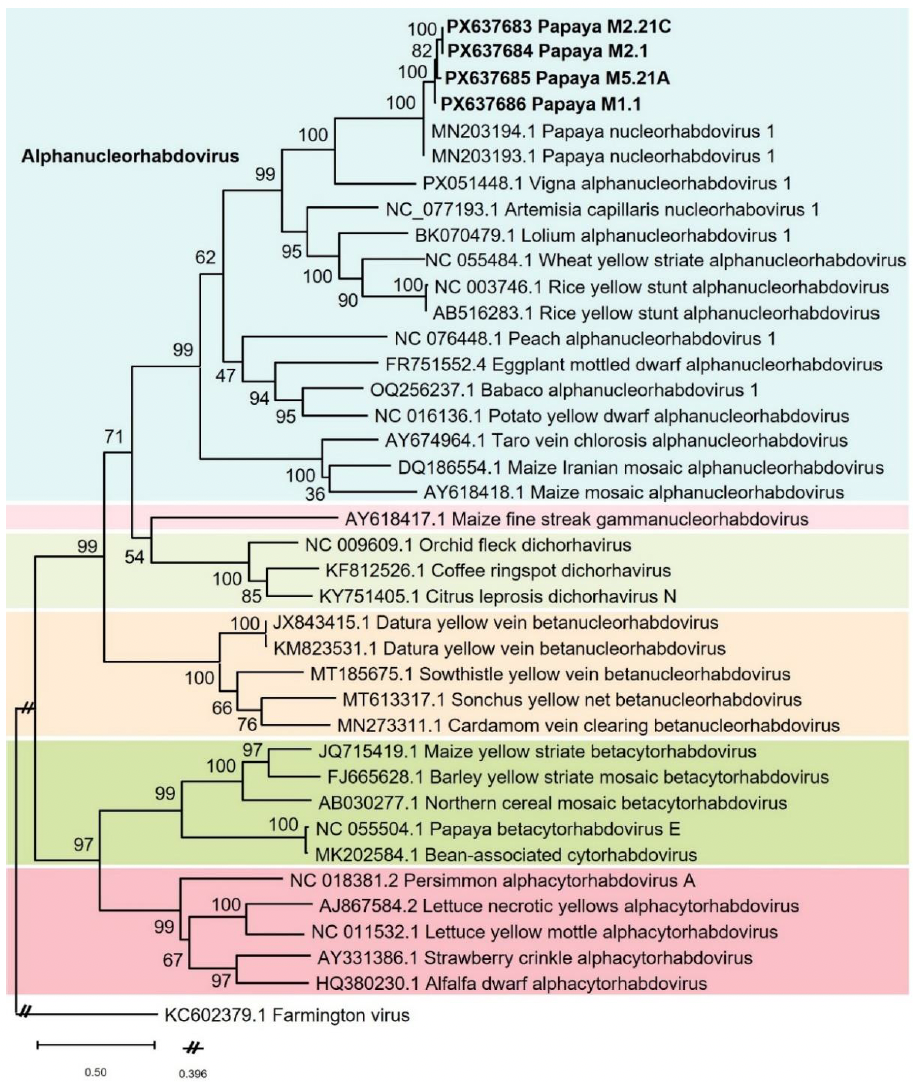
Results. All ELISA tests resulted negative. Bullet-shaped particles inside nuclei, and reticulum endoplasmic were only observed by TEM in symptomatic plants. Amplicons of 900 bp were consistently obtained from symptomatic samples using degenerate primers for plant rhabdoviruses. Nucleotide sequences showed 95.6 and 96.8% similarity to a putative papaya alphanucleorhabdovirus (Alphanucleorhabdovirus, Rhabdoviridae).

Conclusion. This is the first report of a putative alphanucleorhabdovirus associated with symptomatic papaya plants showing streaked petiole ("pecíolo rayado") disease in Costa Rica, but Koch's postulates must be fulfilled and vector identified.

Show Figures and/or Tables
Table 1. Oligonucleotides (primers) and thermocycling profiles used to detect RNA plant viruses in <em>Carica papaya</em> plants analyzed in this study.
Table 1. Oligonucleotides (primers) and thermocycling profiles used to detect RNA plant viruses in Carica papaya plants analyzed in this study.
Table 2. Summary of tests performed and results obtained from foliar samples of symptomatic and asymptomatic <em>Carica papaya</em> plants collected in Costa Rica to determine whether any plant virus is associated with
Table 2. Summary of tests performed and results obtained from foliar samples of symptomatic and asymptomatic Carica papaya plants collected in Costa Rica to determine whether any plant virus is associated with "streaked petiole" disease.
Figure 1. Morphological alterations observed in Carica papaya plants with "streaked petiole" disease in Costa Rica. A) A symptomatic plant (arrow) exhibiting downward-curved petioles, leaf reduction in the apical meristem, and cessation of fruit set. Adjacent (slightly behind) two healthy plants (right) showing prolific fruit development and typical foliar architecture; B) Detailed view of upper part of a symptomatic plant showing leaf reduction in the apical meristem, leaf petiole curved, and poor fruit setting, behind (left) a healthy plant with normal fruit production; C) Detailed view of upper part of a healthy plant; D) Petioles of a diseased plant displaying purple-colored streaks; E) Comparison between petioles from symptomatic (top) and healthy (bottom) plants.
Figure 2. Nucleus of a leaf parenchyma cell of <em>Carica papaya</em> symptomatic plant with "streaked petiole" disease observed with transmission electron microscopy.<strong> A</strong>) Bullet-shaped particles inside membranous vesicles in the nucleus; <strong>B</strong>) Detail of particles seen into the perinuclear space; <strong>C</strong>) Detail of viral particles into the packages scattered in the nucleus. C= cytoplasm, M= mitochondria, N= nucleus, Nu= nucleolus, inm= inner nuclear membrane, mv= membranous vesicle filled of viral particles, onm= outer nuclear membrane, vp= viral particles.
Figure 2. Nucleus of a leaf parenchyma cell of Carica papaya symptomatic plant with "streaked petiole" disease observed with transmission electron microscopy. A) Bullet-shaped particles inside membranous vesicles in the nucleus; B) Detail of particles seen into the perinuclear space; C) Detail of viral particles into the packages scattered in the nucleus. C= cytoplasm, M= mitochondria, N= nucleus, Nu= nucleolus, inm= inner nuclear membrane, mv= membranous vesicle filled of viral particles, onm= outer nuclear membrane, vp= viral particles.
Figure 3. Phylogenetic tree constructed with partial sequences (900 nt) of the viral RNA-dependent RNA polymerase (L gene) of a putative alphanucleorhabdovirus obtained from <em>Carica papaya</em> of Costa Rica (GB Acc. No. PX637683 to PX637686) with 31 different plant rhabdoviruses (34 sequences) and Farmington virus (GB Acc. No. KC602379) as outgroup, all of them retrieved from GenBank. These were aligned with ClustalW algorithm using BioEdit v.7.7.1, and phylogeny inferred with the maximum likelihood method in Mega 12 (General Time Reversible model with a gamma distributed rate of substitution with invariant sites) and a bootstrap of 1 000 replicates.
Figure 3. Phylogenetic tree constructed with partial sequences (900 nt) of the viral RNA-dependent RNA polymerase (L gene) of a putative alphanucleorhabdovirus obtained from Carica papaya of Costa Rica (GB Acc. No. PX637683 to PX637686) with 31 different plant rhabdoviruses (34 sequences) and Farmington virus (GB Acc. No. KC602379) as outgroup, all of them retrieved from GenBank. These were aligned with ClustalW algorithm using BioEdit v.7.7.1, and phylogeny inferred with the maximum likelihood method in Mega 12 (General Time Reversible model with a gamma distributed rate of substitution with invariant sites) and a bootstrap of 1 000 replicates.
  • Vol. 2026, 44(2)
  • Phytopathological Note

Potential transmission of Grapevine red blotch virus (Grablovirus vitis, Geminiviridae) by Nearctic treehopper (Tortistilus wickhami) in Baja California, Mexico

byCynthia Ford Villalón, David Schneider, Idalia Montesinos Solano, Jimena Carrillo Tripp*

Received: 13/December/2025 – Published: 23/April/2026
DOI: https://doi.org/10.18781/R.MEX.FIT.2512-4

Abstract Background/Objective. Grapevine red blotch virus, GRBV (Grablovirus vitis) affects grapevine plants (Vitis vinifera) causing significant economic losses in vineyards. In Mexico, where GRBV has been reported in wine-producing regions such as Baja California, information on potential GRBV vectors remains limited. Although the three-cornered alfalfa hopper (Spissistilus festinus) is a confirmed vector in the USA, the role of other membracids in vineyards around the globe is still unclear. Recently, the Nearctic treehopper (Tortistilus wickhami) has been reported in Baja California, prompting this study to evaluate its potential for GRBV acquisition and transmission.

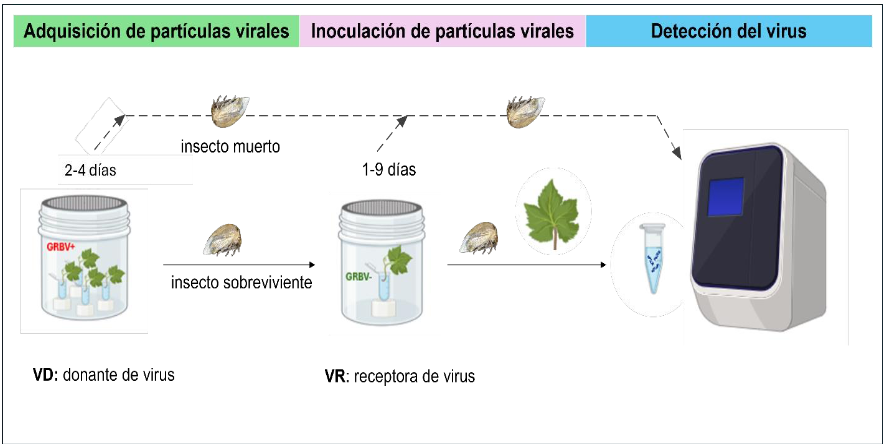
Experimental development. Adult Nearctic treehoppers were collected from February to November 2023 in 20 vineyards in Valle de Guadalupe, Baja California. A total of 30 individuals were screened to detect GRBV by real-time PCR. In May 2024, 17 additional individuals were collected and used in transmission assays, with an acquisition access period of up to 4 days on GRBV-infected grapevine cv. Cabernet Sauvignon leaves, followed by an inoculation access period of up to 9 days on virus-free leaves. Both insects and recipient leaves were tested for GRBV by real-time PCR.

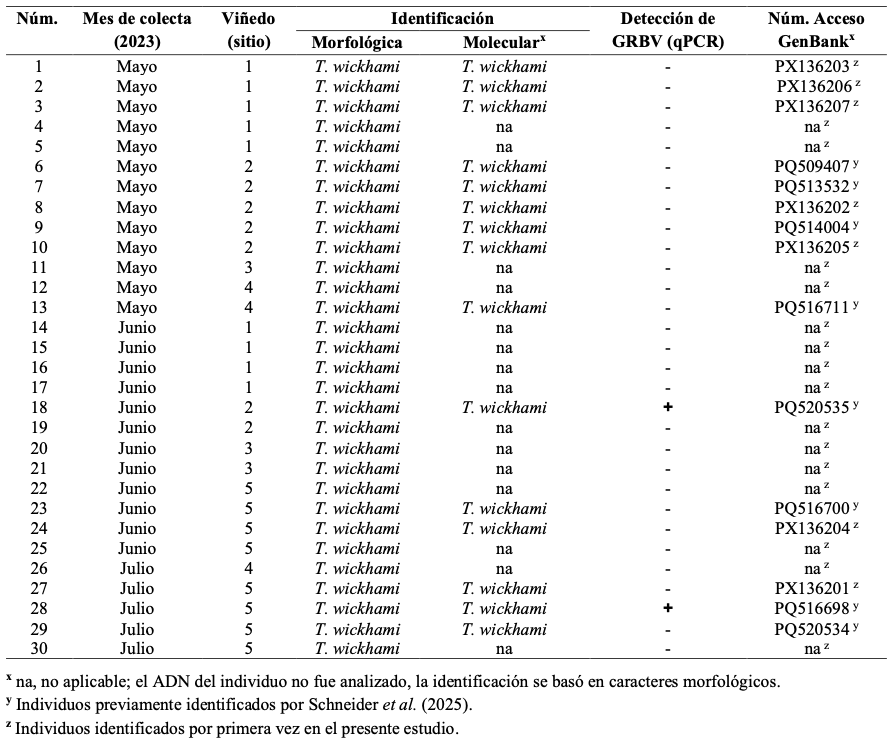
Results. GRBV was detected in 6.7% (2/30) of the individuals collected in 2023, with positive insects only originating from vineyards confirmed as GRBV-positive. In the transmission assays, 53% (9/17) of the insects acquired viral particles after feeding on infected leaves; however, none of the recipient leaves showed detectable infection.

Conclusion. This study demonstrates that the Nearctic treehopper, an insect phylogenetically close to, and morphologically resemblant of the three-cornered alfalfa treehopper (a confirmed GRBV vector), was able to acquire the virus in the field and in laboratory settings, but no transmission to recipient plants was proved under the tested experimental conditions in the laboratory.

Show Figures and/or Tables
Table 1. Taxonomic identification of treehoppers collected at survey sites, and GRBV molecular detection.
Table 2. Results of the transmission assay for GRBV (<em>Grablovirus vitis</em>) by adult Nearctic leafhoppers.
Table 2. Results of the transmission assay for GRBV (Grablovirus vitis) by adult Nearctic leafhoppers.
Figure 1. Schematic representation of the GRBV transmission assay. Insects were first allowed to feed on excised leaves from a GRBV-donor grapevine, then transferred to recipient excised leaves from GRBV-free grapevines to assess potential virus transmission. Individual leaves were maintained in water. Dashed lines indicate the removal of dead insects from inside the cage for GRBV detection at the end of the assay. The schematic diagram was constructed using some elements from BioRender.
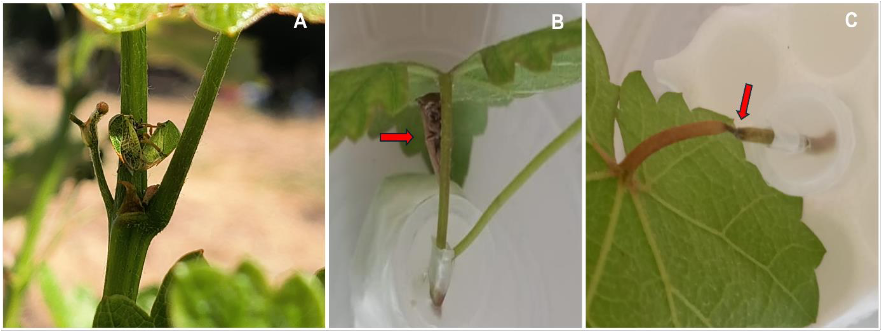
Figure 2. Transmission assay. A) Example of adult Nearctic treehoppers manually collected from a vineyard, used in the transmission assay. Photo credit: Kyara Acosta Ramos. B) interior view of a cage during the viral particle acquisition phase. The cage design facilitated insect–leaf interaction. A portion of the petioles were submerged in sterile water inside 2 mL vials sealed with parafilm, keeping the leaf in a vertical position. C) Ringing mark on the petiole of a recipient leaf caused by mechanical damage after feeding by a Nearctic treehopper.
  • Vol. 2026, 44(2)
  • Phytopathological Note

Peracetic acid for powdery mildew (Erysiphe vaccinii) management in blueberry (Vaccinium corymbosum) under commercial condition in Peru

bySebastian Iglesias Osores*, Luis A Alvarez

Received: 08/December/2025 – Published: 23/April/2026
DOI: https://doi.org/10.18781/R.MEX.FIT.2512-2

Abstract Background/Objective. Blueberry powdery mildew, associated with Erysiphe vaccinii, is a foliar disease that may cause defoliation and affect crop performance. In Peru, information on the foliar use of peracetic acid for its field management is limited. The objective of this study was to evaluate the effect of foliar applications of 15% peracetic acid on powdery mildew incidence in blueberry under field conditions in Ica, Peru.

Experimental development. The trial was conducted in a commercial field of blueberry cv. Biloxi in Ica, Peru, using a randomized complete block design with five treatments: an untreated control and 15% peracetic acid at 2, 4, 6, and 8 mL L-1, with four replicates. Treatments were applied as foliar sprays twice, seven days apart, at a spray volume of 600 L ha-1. The response variable was the incidence of leaves with powdery mildew symptoms (under natural infection), assessed on seven dates from the first application onward. The presence of phytotoxicity symptoms was also visually recorded.

Results. Before the first application, no differences were detected among treatments. After the first application, peracetic acid reduced powdery mildew incidence compared with the control, with initial efficacy of up to 67.7%. After the second application, the 4, 6, and 8 mL L-1 doses showed the best response, with maximum efficacies of 69.3, 78.0, and 79.7%, respectively. The 2 mL L-1 dose showed a lower effect. No visible phytotoxicity symptoms were observed at any of the evaluated doses.

Conclusion. Under the conditions of this trial, 15% peracetic acid reduced foliar powdery mildew incidence in blueberry, with the best response at 4, 6, and 8 mL L-1 (69.3, 78.0, and 79.7%). These results indicate a favorable effect of the product under field conditions, although further evaluation in additional locations or growing seasons is needed for validation.

Show Figures and/or Tables
Table 1. Foliar incidence of powdery mildew in blueberry treated with 15% peracetic acid at seven evaluation dates.
Table 2. Control efficacy against powdery mildew in blueberry treated with 15% peracetic acid, estimated using Abbott’s formula.
  • Vol. 2026, 44(2)
  • Phytopathological Report

Fusariosis level (Fusarium oxysporum) in tomato plants (Solanum lycopersicum) treated with Trichoderma asperellum Jc01 and Bacillus subtilis ANT01

byMiguel Salvador Figueroa, José Fernando Gómez López, Miguel Salvador Adriano, María de Lourdes Adriano Anaya, Isidro Ovando Medina, Benjamín Moreno Castillo*

Received: 26/August/2025 – Published: 11/March/2026
DOI: https://doi.org/10.18781/R.MEX.FIT.2408-4

Abstract Background/Objective. The production and quality of tomato (Solanum lycopersicum) crops are severely reduced by the fungus Fusarium oxysporum, the causal agent of fusarium wilt. Chemical fungicides are conventionally applied, although in cases of severe infection, the entire harvest is lost. Favorable environmental conditions increase the incidence, infection rate, and spread of this pathogen. Biological control is a useful strategy for combating this type of pathogen. The objective of this research was to determine the incidence of fusarium wilt (Fusarium oxysporum) in field-grown tomato plants treated with Trichoderma asperellum Jc01 and Bacillus subtilis ANT01.

Experimental development. Trichoderma asperellum Jc01 and Bacillus subtilis ANT01 either alone or in combination, were weekly applied to the drip zone of tomato plants (Solanum lycopersicum). Disease incidence was periodically sampled in both treated and untreated plants to monitor its progression over 15 weeks. Additionally, the number of flowers and fruits produced on the experimental plants was recorded.

Results. At the end of the field trial, plants treated with B. subtilis ANT01 showed 60% less incidence compared to the control and a total of 47.9 fruits produced per plant, while plants treated with Trichoderma asperellum Jc01 or the combination of both microorganisms showed 16 and 28% less incidence than the control, and 18.0 and 27.3 fruits produced per plant, respectively.

Conclusion. The results show at least partial evidence of the potential of the ANT01 strain as a biocontrol agent of F. oxysporum in tomato plants.

Show Figures and/or Tables
Table 1. Effect of <em>Bacillus subtilis</em> ANT01 and <em>Trichoderma asperellum</em> Jc01 on fusariosis incidence, and on flowers and fruits production in tomato plants.
Table 1. Effect of Bacillus subtilis ANT01 and Trichoderma asperellum Jc01 on fusariosis incidence, and on flowers and fruits production in tomato plants.
Figure 1. Incidence (represented as proportion on a 0-1 scale) of fusariosis-associated symptoms in field-grown tomato plants and subjected to different biological control treatments.
  • Vol. 2026, 44(2)
  • Phytopathological Note

Influence of soil moisture on the incidence and severity of leaf spot (Alternaria alternata) in Glycine max genotypes

byGuillermo Ascencio Luciano, Nicolás Maldonado Moreno, Reinaldo Méndez Aguilar, Moisés Felipe Victoriano*

Received: 21/August/2024 – Published: 06/March/2026
DOI: https://doi.org/10.18781/R.MEX.FIT.2408-00

Abstract Background/Objective. The soybean crop is affected by various diseases caused by fungi, which can severely reduce yields, in some cases up to 100%. The objective of this study was to identify the fungus associated with leaf spot in soybean and to evaluate the influence of soil moisture on the incidence and severity of the disease in plant and leaf in 30 soybean genotypes.

Materials and Methods. Three soybean leaves with leaf spot symptoms were collected per genotype for morphological identification of the fungus using taxonomic keys. Two moisture conditions (irrigated and rainfed) were evaluated. Plant incidence was estimated from 10 randomly selected plants; during the same period, foliar incidence and severity were evaluated. For foliar incidence, healthy and diseased leaves were counted from 10 plants per genotype. Subsequently, from 10 plants per genotype, one leaf in the fifth position from top to bottom was selected. The leaves were photographed, and the damaged area and total leaf area were calculated using the ImageJ software, thereby determining leaf severity.

Results. Alternaria alternata was identified as associated with leaf spot. In the rainfed environment, leaf incidence by A. alternata ranged from 4.4 to 50.55%; for severity, the values ranged between 0.3 and 17.4%. In the irrigated environment, the incidence varied from 7 to 50.9%; the severity ranged from 0 to 24.7%.

Conclusion. A. alternata was associated with leaf spot in soybean, which is little studied in Mexico, and currently its effects on this crop are unknown; therefore, it is of scientific interest to continue working on research projects with this species.

Show Figures and/or Tables
Table 1. Incidence and severity on the leaf of leaf spot caused by <em>Alternaria alternata</em>, on soybean genotypes under irrigation and rainfed conditions in Altamira, Tamaulipas, 2022.
Table 1. Incidence and severity on the leaf of leaf spot caused by Alternaria alternata, on soybean genotypes under irrigation and rainfed conditions in Altamira, Tamaulipas, 2022.
Figure 1. <em>Alternaria alternata</em> on soybean, A) Leaves with symptoms, B) Signs observed under the stereoscopic microscope at 4X, C) <em>A. alternata</em> conidia observed under the light microscope at 40X.
Figure 1. Alternaria alternata on soybean, A) Leaves with symptoms, B) Signs observed under the stereoscopic microscope at 4X, C) A. alternata conidia observed under the light microscope at 40X.
Figure 2. Incidence of leaf spot per plant caused by <em>Alternaria alternata</em>, in soybean genotypes under conditions of irrigation and rainfed in Altamira, Tamaulipas, 2022. HUAS = Huasteca.
Figure 2. Incidence of leaf spot per plant caused by Alternaria alternata, in soybean genotypes under conditions of irrigation and rainfed in Altamira, Tamaulipas, 2022. HUAS = Huasteca.
Figure 3. Symptoms of leaf spot in soybean, induced by <em>Alternaria alternata</em>, leaves located in the fifth position from top to bottom in irrigated soybean genotypes, (genotypes with less damages) H10-3057 (1-2), H02-1706 (3-4), H85-1937 (5-6), H06-1014 (7-8); (genotypes with more damage) H80-0994 (9-10), H17-0331 (11-12), H02-2091 (13-14), H98-1068 (15-16); rainfed conditions, (genotypes with less damage) H02-1706 (17-18), HUAS-700 (19-20), H98-1076 (21-22), H85-1937 (23-24); (genotypes with more damage), H02-2331 (25-26), H02-2295 (27-28), H06-1014 (29-30), H17-0707 (31-32).
Figure 3. Symptoms of leaf spot in soybean, induced by Alternaria alternata, leaves located in the fifth position from top to bottom in irrigated soybean genotypes, (genotypes with less damages) H10-3057 (1-2), H02-1706 (3-4), H85-1937 (5-6), H06-1014 (7-8); (genotypes with more damage) H80-0994 (9-10), H17-0331 (11-12), H02-2091 (13-14), H98-1068 (15-16); rainfed conditions, (genotypes with less damage) H02-1706 (17-18), HUAS-700 (19-20), H98-1076 (21-22), H85-1937 (23-24); (genotypes with more damage), H02-2331 (25-26), H02-2295 (27-28), H06-1014 (29-30), H17-0707 (31-32).
  • Vol. 2026, 44(2)
  • Phytopathological Note

Development and validation of a diagrammatic scale to assess the severity of cucumber downy mildew

byJuan Carlos Gonzalez Acevedo, Santiago Domínguez Monge*, Dagoberto Guillen Sánchez, Víctor López Martínez, Porfirio Juárez López, Irán Alia Tejacal, Julio David Mendoza García

Received: 05/January/2026 – Published: 06/March/2026
DOI: https://doi.org/10.18781/R.MEX.FIT.2601-1

Abstract Background/Objective. Cucumber downy mildew (Cucumis sativus), caused by Pseudoperonospora cubensis, is one of the major foliar diseases affecting cucumber production in Morelos, Mexico. Due to the lack of standardized and validated methods for quantifying disease severity, the objective of this study was to develop and validate a diagrammatic scale for its assessment.

Experimental development. A diagrammatic scale composed of eight severity levels (2, 4, 8, 16, 24, 32, 40, and 47% affected leaf area) was developed using naturally infected leaves whose actual severity was determined through digital image analysis with Assess®️ software. Validation of the scale was conducted with the participation of 20 raters, who visually estimated the severity of 50 leaves with different damage levels in three successive evaluations: one without the aid of the scale (WO) and two with the aid of the scale conducted two (A1) and four weeks (A2) after the initial evaluation.

Results. The use of the diagrammatic scale significantly increased the accuracy of severity estimates, with Pearson´s correlation coefficients of r = 0.91 and r = 0.93 in A1 and A2, respectively, compared to the evaluation without the scale (r = 0.34). Likewise, generalized bias was lower when the scale was used (Cb > 0.9), which was reflected in greater overall agreement between visual estimates and real severity values (ρc > 0.9).

Conclusion. The developed diagrammatic scale is a reliable, accurate, and reproducible tool for estimating cucumber downy mildew severity under field conditions.

Show Figures and/or Tables
Table 1. Analysis of the generalized linear model and separation of means of the statistics of Lin’s concordance analysis used to evaluate accuracy (systematic and constant bias), precision (Pearson’s correlation coefficient, <em>r</em>) and overall concordance (Lin’s concordance coefficient, <em>ρ<sub>c</sub></em>) of the estimated percentages of the severity of downy mildew (<em>Pseudoperonospora cubensis</em>) in the cucumber, performed by 20 unexperienced raters in three successive assessments: without the aid of the diagrammatic scale (WO) and with the aid of the scale two weeks (A1) and four weeks (A2) after the initial assessment.
Table 1. Analysis of the generalized linear model and separation of means of the statistics of Lin’s concordance analysis used to evaluate accuracy (systematic and constant bias), precision (Pearson’s correlation coefficient, r) and overall concordance (Lin’s concordance coefficient, ρc) of the estimated percentages of the severity of downy mildew (Pseudoperonospora cubensis) in the cucumber, performed by 20 unexperienced raters in three successive assessments: without the aid of the diagrammatic scale (WO) and with the aid of the scale two weeks (A1) and four weeks (A2) after the initial assessment.
Table 2. Measures of reliability between raters of the estimations of the severity of downy mildew (<em>Pseudoperonospora cubensis</em>) carried out by 20 unexperienced raters in three successive assessments: without the aid of the diagrammatic scale (WO) and with the aid of the diagrammatic scale two (A1) and four weeks (A2) after the initial assessment.
Table 2. Measures of reliability between raters of the estimations of the severity of downy mildew (Pseudoperonospora cubensis) carried out by 20 unexperienced raters in three successive assessments: without the aid of the diagrammatic scale (WO) and with the aid of the diagrammatic scale two (A1) and four weeks (A2) after the initial assessment.
Figure 1. Scale developed for the severity of downy mildew from <em>Pseudoperonospora cubensis</em> in cucumber leaves. Numbers in the diagrams represent the percentage (%) of the area of the leaf with necrotic symptoms of the disease.
Figure 1. Scale developed for the severity of downy mildew from Pseudoperonospora cubensis in cucumber leaves. Numbers in the diagrams represent the percentage (%) of the area of the leaf with necrotic symptoms of the disease.
Figure 2. Relationship between estimates and real severity of the downy mildew (<em>Pseudoperonospora cubensis</em>) by 20 inexperienced raters for a set of 50 evaluated leaves (n=1000). The first assessment was carried out without the diagrammatic scale (WO), followed by two additional assessments performed two (A1) and four weeks (A2) later, using a diagrammatic scale that represents levels of severity between 2 and 47% of the leaf area affected. Dotted lines indicate the concordance line (<em>y</em> = <em>x</em>).
Figure 2. Relationship between estimates and real severity of the downy mildew (Pseudoperonospora cubensis) by 20 inexperienced raters for a set of 50 evaluated leaves (n=1000). The first assessment was carried out without the diagrammatic scale (WO), followed by two additional assessments performed two (A1) and four weeks (A2) later, using a diagrammatic scale that represents levels of severity between 2 and 47% of the leaf area affected. Dotted lines indicate the concordance line (y = x).
Figure 3. Distribution, mean and standard deviation of the statistics from Lin’s concordance analysis used to evaluate accuracy (systematic and constant bias), precision (Pearson’s correlation coefficient, <em>r</em>) and concordance (Lin’s concordance correlation coefficient, <em>ρ<sub>c</sub></em>) of the estimations of severity of downy mildew (<em>Pseudoperonospora cubensis</em>) carried out by 20 unexperienced raters in the successive assessments, The first assessment was performed without the aid of the scale (WO), followed by two assessments with the scale two (A1) and four weeks (A2) after the initial assessment.
Figure 3. Distribution, mean and standard deviation of the statistics from Lin’s concordance analysis used to evaluate accuracy (systematic and constant bias), precision (Pearson’s correlation coefficient, r) and concordance (Lin’s concordance correlation coefficient, ρc) of the estimations of severity of downy mildew (Pseudoperonospora cubensis) carried out by 20 unexperienced raters in the successive assessments, The first assessment was performed without the aid of the scale (WO), followed by two assessments with the scale two (A1) and four weeks (A2) after the initial assessment.
  • Vol. 2026, 44(2)
  • Phytopathological Note

Strategies to reduce losses from Fusarium graminearum head blight in bread wheat

byVíctor Manuel Arzola Mora, Héctor Eduardo Villaseñor Mir, Salvador Carranza González*, Carlos Sánchez Abarca, René Hortelano Santa Rosa, Julio Huerta Espino, María Elsa Rodríguez Contreras, Pawan Kumar Singh, Xinyao He

Received: 14/October/2025 – Published: 02/March/2026
DOI: https://doi.org/10.18781/R.MEX.FIT.2510-3

Abstract Background/Objective. Head blight (fusarium), caused by Fusarium graminearum in bread wheat, reduces crop yield and contaminates the grain with mycotoxins such as deoxynivalenol (DON), which affects the quality and safety of the product. Its severity increases in warm and humid areas during flowering, which highlights the need for integrated management strategies. The present study aimed to evaluate the interaction between three wheat genotypes (Heilo, Falcin and Ocoroni F86) and three fungicides Tilt® 250 EC (25% propiconazole), Nativo® 300 SC [trifloxistrobin (20%) + tebuconazole (10%)); and Folicur® 250 EW (tebuconazole (25%)], in order to reduce the severity of F. graminearum and improve yield under field conditions during two production cycles.

Experimental development. The experiment was carried out at the INIFAP Valley of Mexico Experimental Field during the spring-summer 2022 and 2023 cycles, a split plot design with three replications was used. Agronomic variables such as days to flowering (DF), days to maturity (DM), plant height (ALT), grain yield (REND) and severity of F. graminearum in the head (FEsp) were recorded. Statistical analysis was carried out using ANOVA, Duncan´s test (p<0.05) and Pearson´s correlations.

Results. The Heilo variety, when propiconazole (25%) or trifloxistrobin (20%) + tebuconazole (10%) was applied, showed the highest yield (>4 000 kg ha⁻¹) and the lowest severity of fusarium head scab (FEsp ≤1.5). In contrast, Ocoroni F86 was susceptible, even under chemical treatment. Climatic conditions had a significant effect on the severity of the disease.

Conclusion. The combines use of varieties with genetic resistance and triazole fungicides is a feasible agronomic strategy to mitigate fusarium head scab. It is recommended to validate these results in different environments to expand their applicability.

Show Figures and/or Tables
Table 1. Analysis of variance (ANOVA) and statistical significance between the interactions of three varieties of bread wheat and three fungicides in two production cycles.
Table 2. Comparison of means of the variables evaluated in three wheat varieties in two production cycles.
Table 3. Comparison of means of the variables evaluated for three fungicides and three varieties of bread wheat during two production cycles.
Table 4. Comparison of means of the variables evaluated in two production cycles in three varieties of bread wheat.
Figure 1. Modified visual scale by Stack and McMullen (1998), used to assess the severity of <em>F. graminearum</em> in spikes, modified. A) Low severity: similar heads obtained values on the scale of 1-4; B) Medium severity: similar heads obtained values on the scale of 5-7; C) High severity: similar heads obtained a scale of 8-9.
Figure 1. Modified visual scale by Stack and McMullen (1998), used to assess the severity of F. graminearum in spikes, modified. A) Low severity: similar heads obtained values on the scale of 1-4; B) Medium severity: similar heads obtained values on the scale of 5-7; C) High severity: similar heads obtained a scale of 8-9.
Figure 2. Mean yield (A) and severity of <em>F. graminearum</em> (B) in the head (FEsp) for the interaction of three varieties of bread wheat and three fungicides.
Figure 2. Mean yield (A) and severity of F. graminearum (B) in the head (FEsp) for the interaction of three varieties of bread wheat and three fungicides.
  • Vol. 2026, 44(2)
  • Scientific Article

Pantoea vagans, causal agent of stem rot in pitahaya (Selenicereus undatus, syn. Hylocereus undatus) in Puebla, Mexico

byEdith Luna Martínez, Sergio Aranda Ocampo*, Dimas Mejía Sánchez, Candelario Ortega Acosta, Manuel Livera Muñoz, Laura Delia Ortega Arenas, Antonio Mora Aguilera, Eligio Pérez Sosa, Daniel Telìz Ortiz

Received: 08/December/2025 – Published: 25/February/2026
DOI: https://doi.org/10.18781/R.MEX.FIT.2512-3

Abstract Background/Objective. The cultivation of pitahaya (Selenicereus undatus) has expanded in recent years in Mexico. In 2023, symptoms of stem rot were observed in commercial pitahaya orchards in the state of Puebla. The objective was to characterize and identify the causal agent of stem rot, evaluate the pathogenicity of the causal agent in different pitahaya species as well as other plant species, and assess its in vitro sensitivity to commercial bactericide formulations.

Materials and Methods. Ten rotten stems from Huitziltepec, Puebla, were analyzed. Tissue samples from each stem were disinfected and macerated in 500 μL of sterile distilled water; from there, 100 μL were seeded in Wilbrink's and King's B culture media. From the bacterial growth, strain CPHU23 was biochemically characterized and identified by multilocus sequence analysis (MLSA) and phylogenetic analysis of the rpoB, gyrB, leuS, and fusA genes. The pathogenicity of CPHU23 was evaluated by infiltration of 3 × 10⁸ CFU mL⁻¹ in five species of the genus Selenicereus: S. ocamponis, S. purpusi, Selenicereus sp. “Golden,” Selenicereus sp. “Solferina” and S. undatus, as well as in Agave cupreata, A. angustifolia, Aloe vera, Allium cepa, Solanum lycopersicum, and Capsicum annuum. In vitro sensitivity was determined by the disk diffusion method with 10 commercial bactericide formulations.

Results. Three bacterial morphotypes were isolated from the 10 stems. The CPHU23 morphotype was the most common, with yellow, round colonies with smooth edges and a mucoid appearance. Biochemical characterization of the CPHU23 strain showed 93% similarity to Pantoea vagans. MLSA analysis phylogenetically grouped the CPHU23 isolate within the Pantoea vagans clade, phylogenetically related to the type strains of P. vagans LMG 24199, YI-1, and MA I6050 with bootstrap support greater than 85%. Inoculation with P. vagans CPHU23 caused stem rot in the five species of the genus Selenicereus, in leaves of A. cupreata and A. vera, but not in bulbs of A. cepa and fruits of S. lycopersicum and C. annuum. Pantoea vagans CPHU23 was sensitive in vitro to copper oxychloride, gentamicin sulfate, oxytetracycline hydrochloride, and streptomycin, but resistant to kasugamycin.

Conclusion. Pantoea vagans is the causal agent of stem rot in pitahaya in Puebla. All five pitahaya varieties are susceptible to stem rot. Agave cupreata and Aloe vera could be potential hosts for P. vagans. The use of copper oxychloride may be an efficient management strategy for P. vagans in pitahaya cultivation in Mexico.

Show Figures and/or Tables
Table 1. Primers and PCR conditions used for multilocus identification of bacteria isolated from pitahaya stem rot symptom.
Table 2. Physiological and biochemical characterization, pathogenicity, and <em>in vitro</em> sensitivity to bactericides of <em>P. vagans</em> CPHU23 isolated from stem rot of <em>S. undatus</em>.
Table 2. Physiological and biochemical characterization, pathogenicity, and in vitro sensitivity to bactericides of P. vagans CPHU23 isolated from stem rot of S. undatus.
Figure 1. <strong>A</strong>) Symptom of rot on the stem of pitahaya (<em>Selenicereus undatus</em>) in a commercial orchard in the community of Santa Ana; <strong>B</strong>) Location of the orchard in the municipality of Huitziltepec, Puebla.
Figure 1. A) Symptom of rot on the stem of pitahaya (Selenicereus undatus) in a commercial orchard in the community of Santa Ana; B) Location of the orchard in the municipality of Huitziltepec, Puebla.
Figure 2. Morphology of bacterial colonies isolated from the stem of <em>Selenicereus undatus</em> with symptoms of rot. Strain CPHU23 on Wilbrink's medium (A) and King's medium (B, C) incubated at 28 °C for 72 h.
Figure 2. Morphology of bacterial colonies isolated from the stem of Selenicereus undatus with symptoms of rot. Strain CPHU23 on Wilbrink's medium (A) and King's medium (B, C) incubated at 28 °C for 72 h.
Figure 3. Maximum-likelihood phylogenetic tree based on the TIM2+I+G4 model, derived from the concatenation of four housekeeping genes (<em>fus</em>A, g<em>yr</em>B, <em>rpo</em>B, and <em>leu</em>S) from strains of the genus <em>Pantoea</em>. Ultrafast bootstrap values >70% (generated from 1000 replicates) are shown at branch nodes. <em>Tatumella punctata</em> LMG23562 was used as an outgroup. The strain CPHU23 isolated from S. undatus in this study is shown in bold.
Figure 3. Maximum-likelihood phylogenetic tree based on the TIM2+I+G4 model, derived from the concatenation of four housekeeping genes (fusA, gyrB, rpoB, and leuS) from strains of the genus Pantoea. Ultrafast bootstrap values >70% (generated from 1000 replicates) are shown at branch nodes. Tatumella punctata LMG23562 was used as an outgroup. The strain CPHU23 isolated from S. undatus in this study is shown in bold.
Figure 4. Rot in pitahaya stems inoculated by infiltration with a suspension containing 3 × 10⁸ CFU mL⁻¹ of <em>Pantoea vagans</em> CPHU23. A) <em>Selenicereus undatus</em>, B) <em>Selenicereus</em> sp. “Golden,” C) <em>Selenicereus purpusi</em>, D) <em>Selenicereus ocamponis</em>, and E) <em>Selenicereus</em> “Solferina”. T= control, I= inoculated.
Figure 4. Rot in pitahaya stems inoculated by infiltration with a suspension containing 3 × 10⁸ CFU mL⁻¹ of Pantoea vagans CPHU23. A) Selenicereus undatus, B) Selenicereus sp. “Golden,” C) Selenicereus purpusi, D) Selenicereus ocamponis, and E) Selenicereus “Solferina”. T= control, I= inoculated.
Figure 5. Leaf rot in D) <em>Aloe vera</em>, E) <em>Agave angustifolia</em>, and F) <em>Agave cupreata</em> inoculated by infiltration with a suspension containing 3 × 10⁸ CFU mL⁻¹ of <em>Pantoea vagans</em> CPHU23. A, B, and C = controls.
Figure 5. Leaf rot in D) Aloe vera, E) Agave angustifolia, and F) Agave cupreata inoculated by infiltration with a suspension containing 3 × 10⁸ CFU mL⁻¹ of Pantoea vagans CPHU23. A, B, and C = controls.
More Papers…

Inicia Sesión