Click on the cite to copy
-
Or Copy link

Article filters
Search Papers:
Biocontrol of Fusarium oxysporum and growth promotion in chili pepper using Bacillus cereus and B. thuringiensis
By Maribel Mendoza Alatorre, Aldo Gutiérrez Chávez, Angélica Anahí Acevedo Barrera, Loreto Robles Hernández, Jared Hernández Huerta*
*Corresponding Author.
Received: 20/November/2024 – Published:
06/June/2025
DOI:
https://doi.org/10.18781/R.MEX.FIT.2024-15
-
Or Copy link
Abstract Background/Objective. Fusarium oxysporum is the causal agent of chili wilt, and an ecological strategy for its management may involve the use of Bacillus spp., as they have demonstrated both biocontrol activity against phytopathogenic fungi and plant growth promoting (PGP) abilities. The objective was to evaluate the biocontrol and PGP capacity of B. cereus and B. thuringiensis and their effect on morphological variables in jalapeño pepper and the reduction of wilt severity.
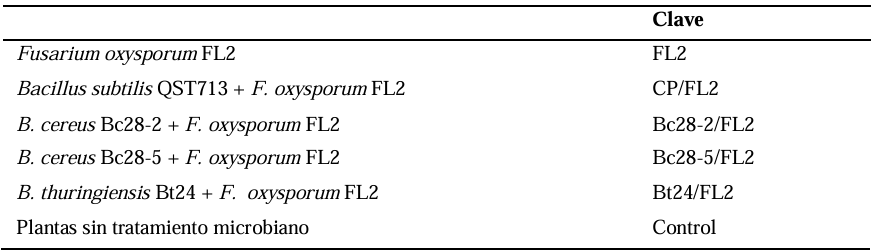
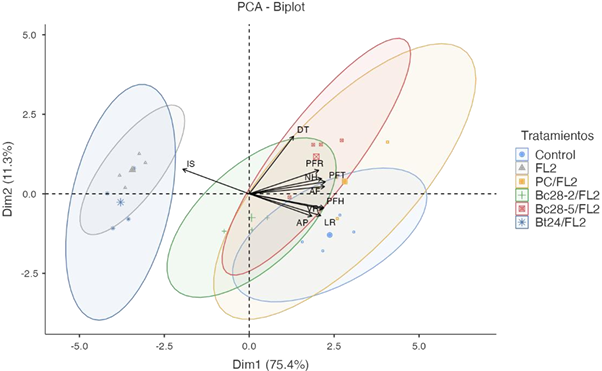
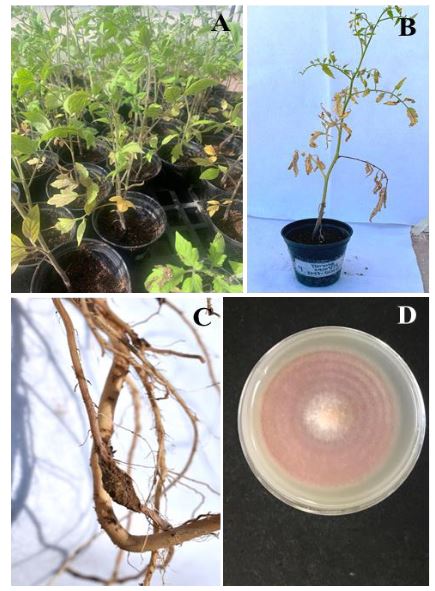
Materials and Methods. Pathogenicity and virulence tests were conducted on jalapeño seedlings using six F. oxysporum strains isolated from pepper plants. In vitro antagonism assays were performed between native strains B. cereus Bc28-2 (Bc28-2), B. cereus Bc28 5 (Bc28-5), and B. thuringiensis Bt24 (Bt24), using Bacillus subtilis QST713 as a positive control (PC), against the F. oxysporum strains. PGP assays were also conducted on pepper seedlings using the Bacillus strains. Additionally, biocontrol tests against F. oxysporum FL2 were conducted under greenhouse conditions. Data were analyzed using ANOVA, mean separation tests (p < 0.05), and a principal component analysis (PCA). R
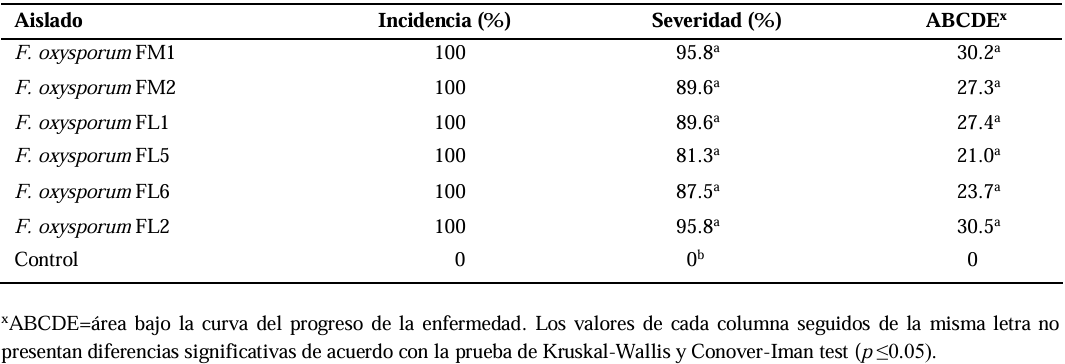
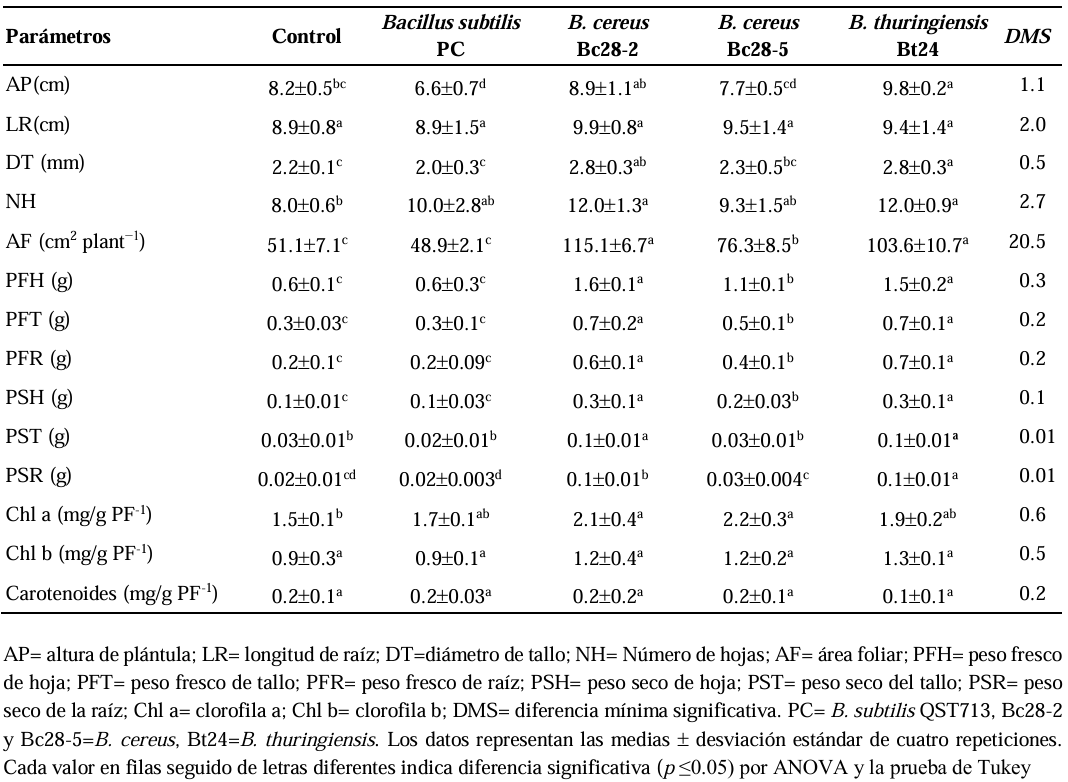
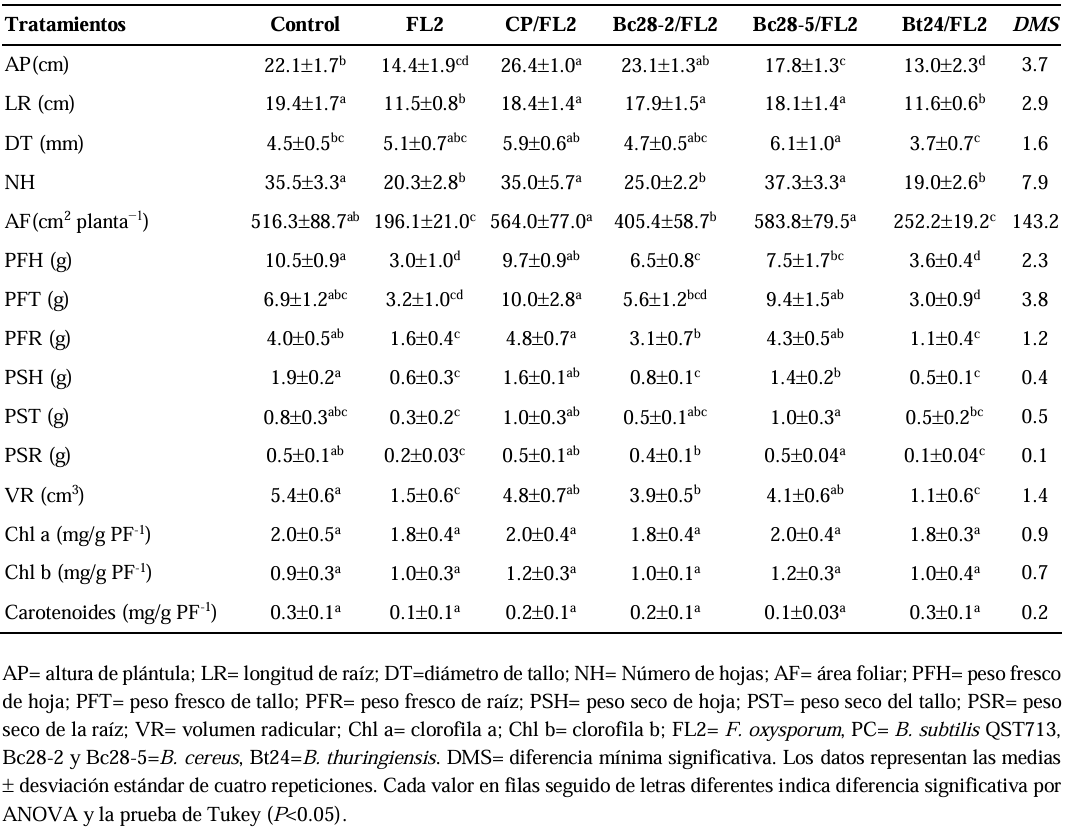
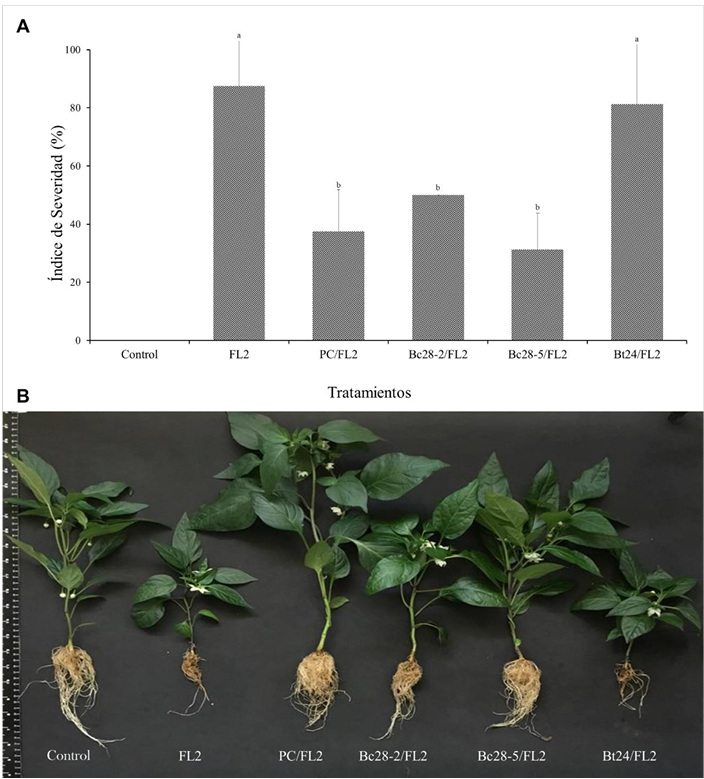
esults. All F. oxysporum strains were pathogenic, with 100% incidence and 89.9% severity. The PC strain achieved the highest fungal spore degradation (86.7%), followed by Bc28-2 and Bc28-5 (84.2%). Bt24 and Bc28-2 promoted the best development of pepper seedlings, showing increases in vegetative parameters. In the biocontrol of F. oxysporum FL2, Bc28-2, and Bc28-5 reduced disease severity by 60.4% and promoted growth comparable to the control, whereas Bt24 showed no efficacy in controlling wilt.
Conclusion. The results indicate the potential of Bacillus cereus Bc28-2 and Bc28-5 as biocontrol agents against F. oxysporum in jalapeño pepper. However, field validation and exploration of their integration into sustainable agricultural management are necessary.
Keywords: Bacillus, Plant growth promotion, Biocontrol, Chili pepper, Antagonism