Click on the cite to copy
-
Or Copy link


Article filters
Search Papers:
Alternaria in Mexico: Morphological and molecular characterization, associated diseases, and management strategies
By Nahomy Monserrat Escalera Mares, Juan Daniel Lira Morales, Edith Salazar Villa, Lorena Molina Cárdenas, Indira Rojo Báez*
*Corresponding Author.
Received: 10/July/2024 – Published:
27/December/2025
DOI:
https://doi.org/10.18781/R.MEX.FIT.2024-32
-
Or Copy link
Abstract Justification. Within the genus Alternaria, several phytopathogenic species stand out for causing diseases such as leaf spot and blight in hosts including fruit trees, cereals, vegetables, and ornamental plants, resulting in significant economic losses. Despite this issue, information on the genus Alternaria in Mexico is limited and scattered. Therefore, the objective of this review was to describe the current status of the genus Alternaria in Mexico through a compilation of published studies on the characterization of reported pathogenic species, the diseases they cause in plants, and the various control strategies employed.
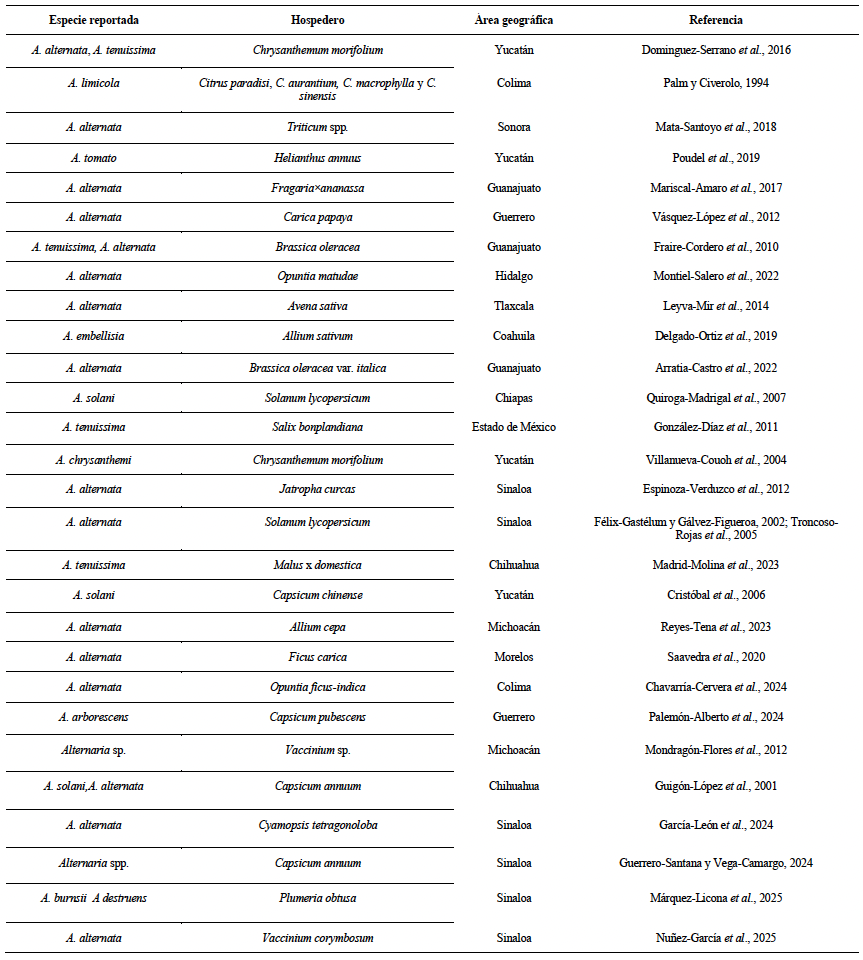
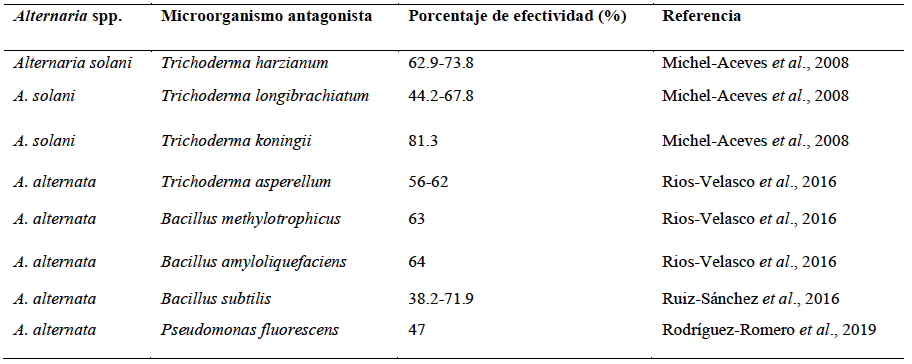
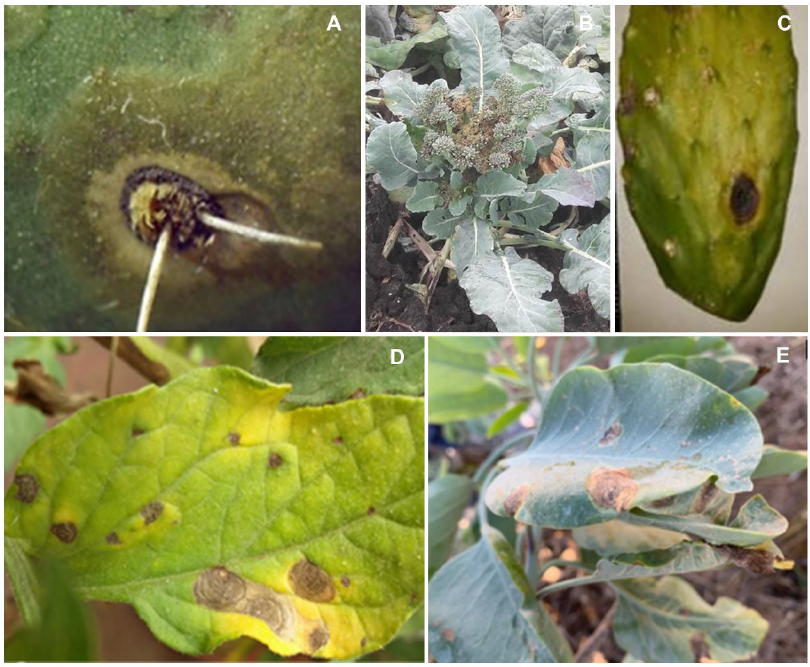
Theoretical and experimental framework. Traditional identification of the genus Alternaria is based on morphological characteristics observed in culture; however, intra- and interspecific variability limits its accuracy. Consequently, molecular tools such as PCR, sequencing, and phylogenetic analysis are used to distinguish species and establish more precise evolutionary relationships. In Mexico, this genus affects more than 20 agricultural and ornamental hosts across 15 states, causing diseases in chrysanthemum, papaya, cacti, broccoli, pepper, and tomato, with incidences exceeding 40% in some crops. Its management requires an integrated approach combining accurate diagnosis, rational use of fungicides, strategies based on crop phenology and inoculum density, and sustainable alternatives such as biological control, plant extracts, microalgae, and nanoparticles, which have shown high efficacy and reduced environmental impact.
Conclusions and Perspectives. In Mexico, nine species have been reported affecting 23 cultivated hosts, although information gaps remain for ornamental, forest, and native species. The main challenges for their control stem from incorrect disease diagnosis, which limits the application of effective strategies.
Keywords: Phytopathogenic fungus, Diagnosis, Control, Leaf blight, Leaf spot