Click on the cite to copy
-
Or Copy link


Article filters
Search Papers:
Phytochemicals from agricultural and agro-industrial waste: An alternative for the control of phytopathogenic bacteria and fungi
By Luis Alfonso Jiménez Ortega, Octavio Valdez Baro, Laura A Contreras Angulo, Erick P Gutiérrez Grijalva, Karina Valencia Sandoval, Raymundo Saúl García Estrada, José Basilio Heredia*
*Corresponding Author.
Received: 22/May/2025 – Published:
09/February/2026
DOI:
https://doi.org/10.18781/R.MEX.FIT.2206-3
-
Or Copy link
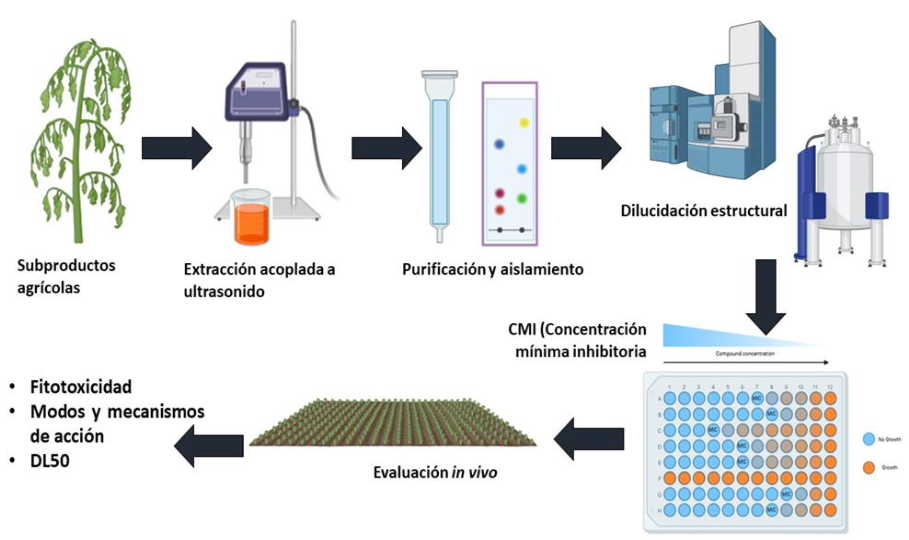
Abstract Justification. The use of chemical pesticides has been widespread for several decades, proving effective in controlling pests that reduce crop quality and productivity. However, due to their chemical nature, they present side effects that affect the health of the applicator, the consumer, and the environment. Therefore, the use of natural products is currently emerging as an alternative for controlling phytopathogenic diseases and pests. The objective of this research was to review and analyze the bactericidal and fungicidal effects of phytochemical-rich extracts obtained from agricultural and agro-industrial byproducts and waste.
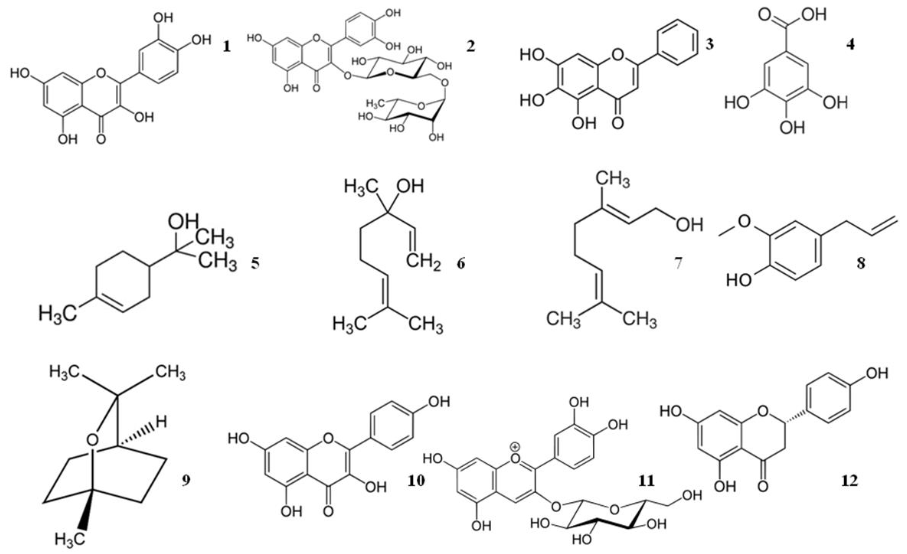
Theoretical and experimental framework. A literature review was conducted using Scopus and Web of Science, focusing on English- and Spanish-language publications from the last 10 years. Only publications related to the extraction of phytochemicals from agricultural and/or agro-industrial byproducts and that investigated their effect against phytopathogenic organisms were considered. In this regard, the main phytochemicals with antibacterial and antifungal activity are phenolic compounds such as flavonoids and other derivatives. Likewise, hydrophobic compounds such as terpenes (essential oils) have demonstrated biocidal potential at concentrations similar to those currently marketed. The main modes and mechanisms of action are multi-target, meaning they affect more than one metabolic pathway and organelle. For example, they affect the cell membrane by inserting into the lipid bilayer, reduce biofilm formation, reduce ergosterol synthesis, and attenuate chitin synthesis in the cell wall.
Conclusions and Perspectives. Phytochemicals with potent bactericidal and fungicidal activity were identified, primarily phenolic compounds and essential oils (terpenes). These phytochemicals exhibited IC50 values and reduction percentages even higher than those of the chemical controls. Agricultural byproducts and biomass, which are undervalued resources, represent an important alternative for extracting value-added phytochemicals that can be used across multiple industries, including agriculture, to develop sustainable, non-toxic biopesticides.
Keywords: Natural products, Essential oils, Antibacterials, Antifungals, Green chemistry