Click on the cite to copy
-
Or Copy link



Article filters
Search Papers:
Spatial behavior of iron spot (Mycosphaerella coffeicola) in coffee plantations in Amatepec, State of Mexico
By José Francisco Ramírez Dávila, Fidel Lara Vázquez*, Dulce Karen Figueroa Figueroa, María Teresa Lugo Coyote
*Corresponding Author.
Received: 14/March/2025 – Published:
20/December/2025
DOI:
https://doi.org/10.18781/R.MEX.FIT.2212-5
-
Or Copy link
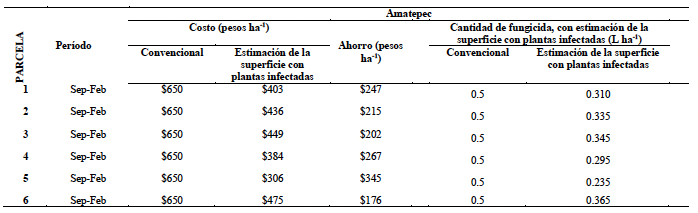
Abstract Background/Objective. Coffee production in the State of Mexico, particularly in the municipality of Amatepec, is threatened by several diseases, including iron spot caused by Mycosphaerella coffeicola. This foliar disease negatively affects coffee yield and quality. The objective of this study was to model the spatial distribution of iron spot in coffee plantations in Amatepec using classical statistics and geostatistics, estimating the infected area to economically evaluate management strategies.
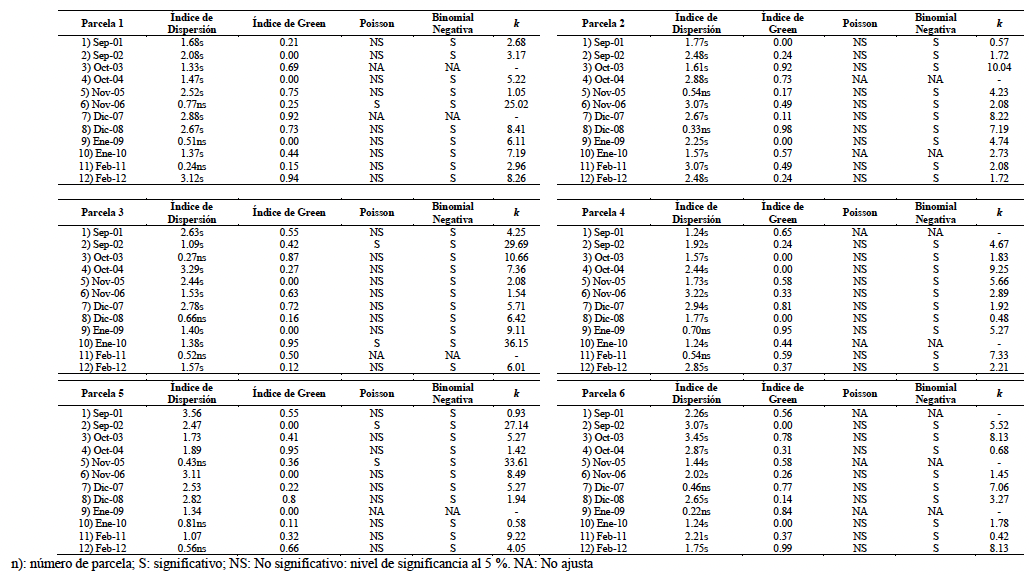
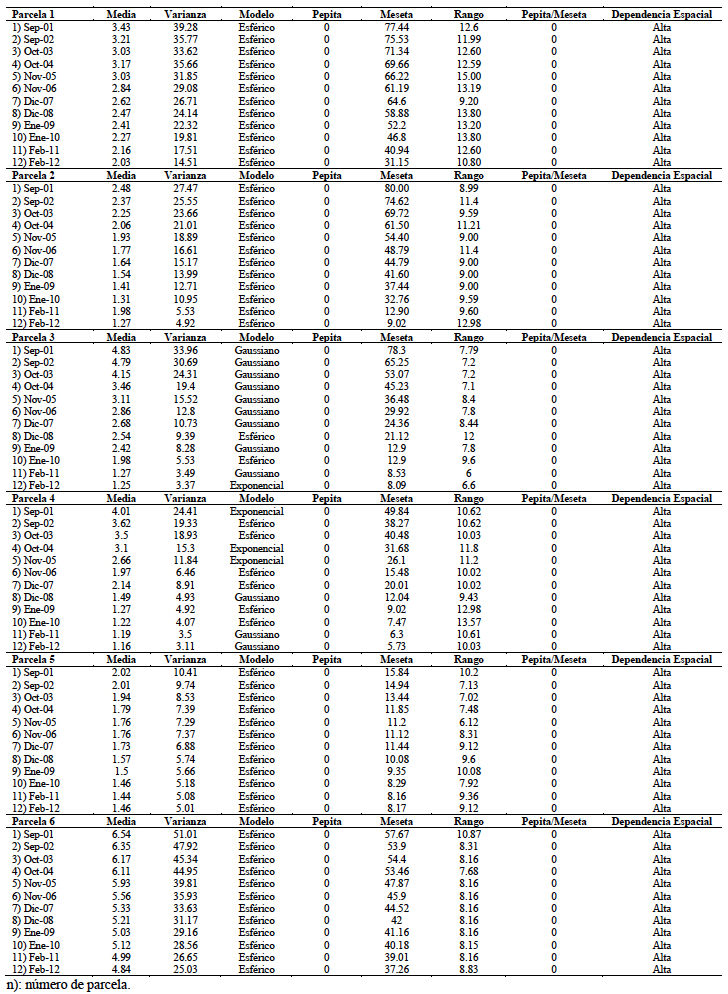
Experimental development. In six coffee plots planted with the cultivars Caturra and Typica, 100 plants per plot were georeferenced using a quadrant sampling method and monitored biweekly for six months. From each plant, 36 leaves were sampled considering the four cardinal points and three canopy strata (upper, middle, and lower). Data were analyzed using classical statistics (dispersion and Green’s indices, Poisson and Negative Binomial distributions) and geostatistics (theoretical semivariograms and Ordinary Kriging).
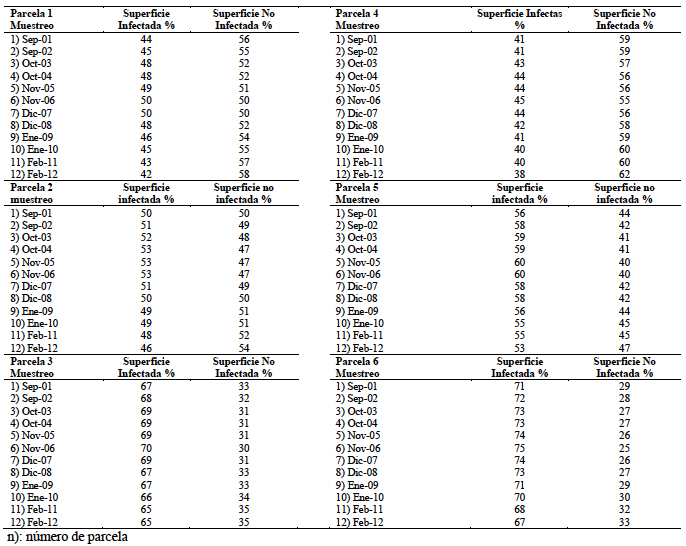
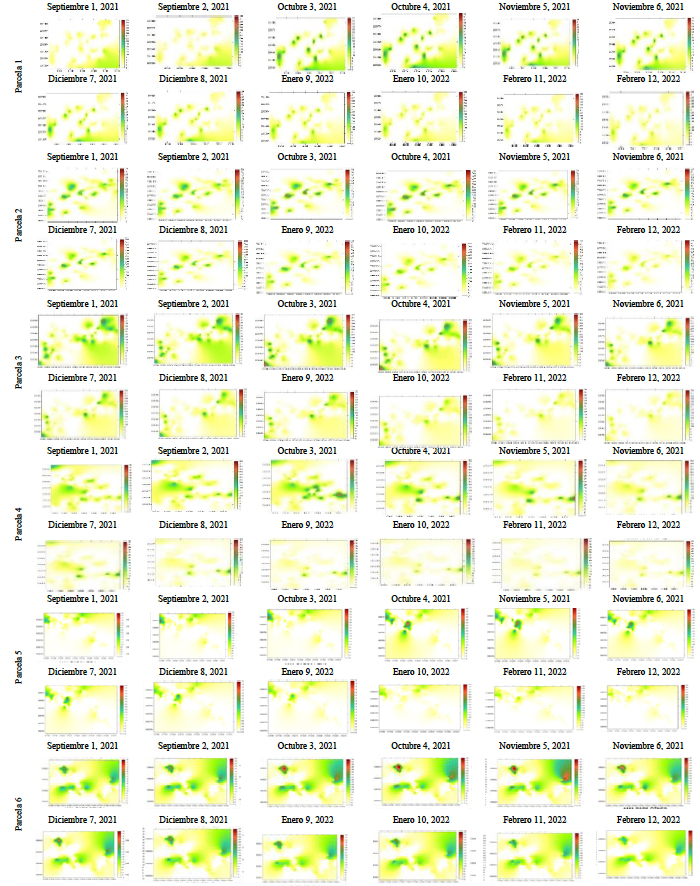
Results. Classical statistics indicated an aggregated distribution of the disease but lacked sufficient spatial precision. Geostatistical analysis generated theoretical semivariograms (Gaussian, Spherical, and Exponential models) and Ordinary Kriging maps that clearly visualized disease distribution. This approach allowed the identification of infection foci and a reliable estimation of the infected area, supporting precision management strategies.
Conclusion. Geostatistics provided greater precision than classical statistics for spatial analysis of iron spot. Ordinary Kriging maps identified areas with and without disease presence, enabling more efficient and targeted management actions.
Keywords: Geostatistics, Interpolation, Ordinary Kriging, Spatial variability