Click on the cite to copy
-
Or Copy link

Article filters
Search Papers:
In vitro and in planta effect of silicon and phosphites in control of Fusarium oxysporum f. sp. lycopersici causing wilting of tomato
By Magda Rocío Gómez Marroquín*, Sandra L Carmona, Diana Burbano David, Andrea del Pilar Villarreal, Mauricio Soto Suárez, Adriana González Almario
*Corresponding Author.
Received: 15/June/2025 – Published:
29/April/2026
DOI:
https://doi.org/10.18781/R.MEX.FIT.2401-3
-
Or Copy link
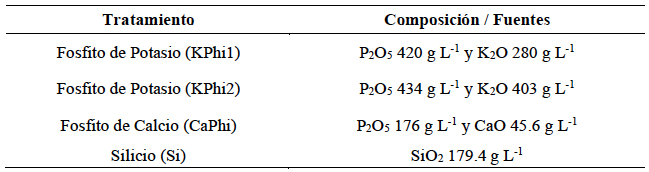
Abstract Background/Objective. Bioactive substances such as phosphites and silicon present a promising alternative for management of vascular wilt of tomato, due to their potential to inhibit pathogen growth and to induce plant defense mechanisms. The objective of this study was to evaluate the effect of three phosphite sources and a source of silicon on isolate Fol59 of Fusarium oxysporum f. sp. lycopersici race 2 via in vitro and in planta assays.
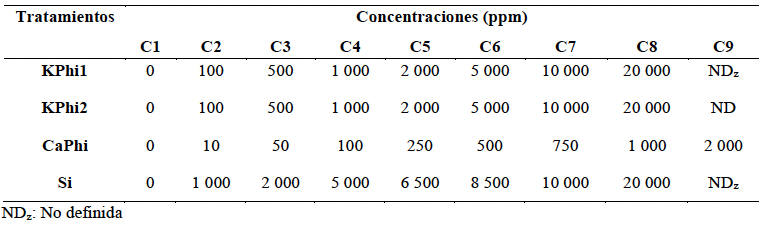
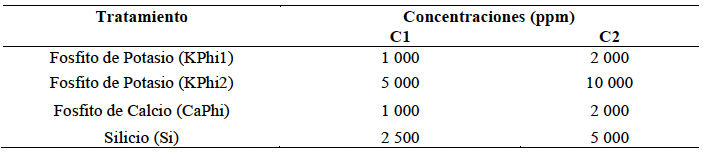
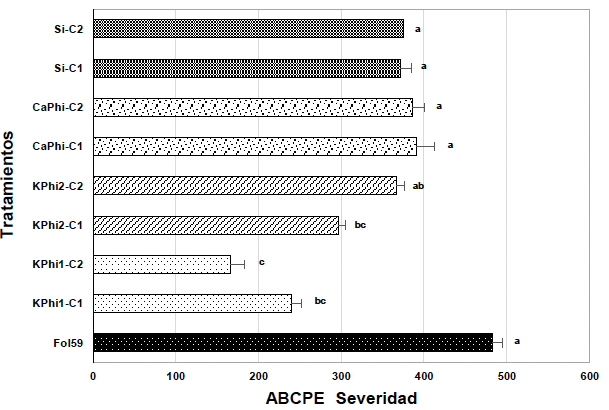
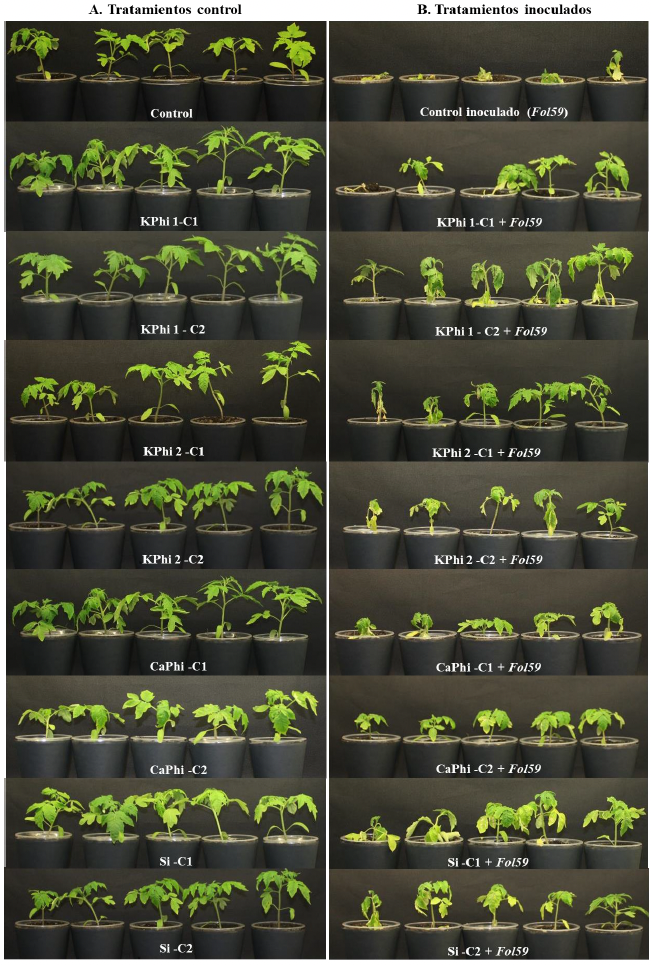
Materials and Methods. In in vitro conditions, percentage of radial growth inhibition (PRGI) of isolate Fol59 was determined in PDA medium supplemented with each bioactive substance in concentrations between 10 and 20 000 ppm following a completely randomized design (4 × 9) with four treatments and nine different concentrations; five technical replicates and three biological replicates. In in planta conditions, the area under the disease progress curve (AUDPC) and efficacy percentage were evaluated with a completely randomized design (4 × 2) with four treatments and two different concentrations under four experimental conditions: control, inoculated control, treatments without inoculation and inoculated treatments. 20 experimental units and three biological replicates were used per treatment.
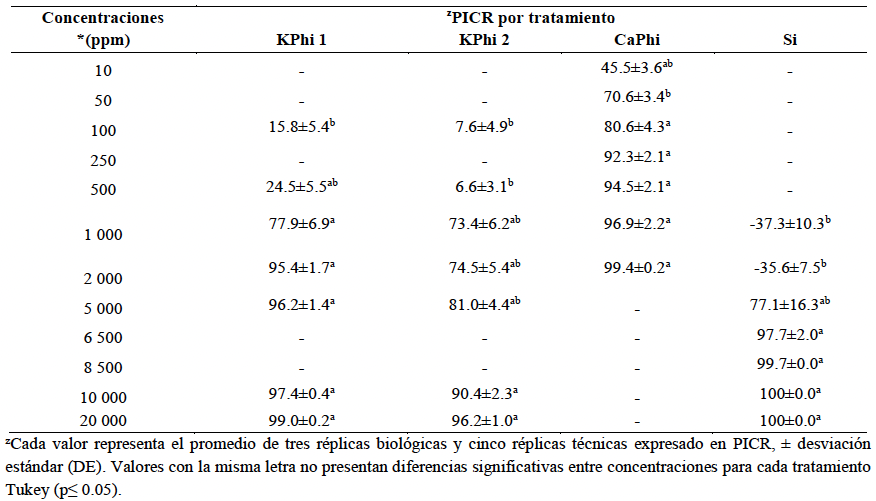
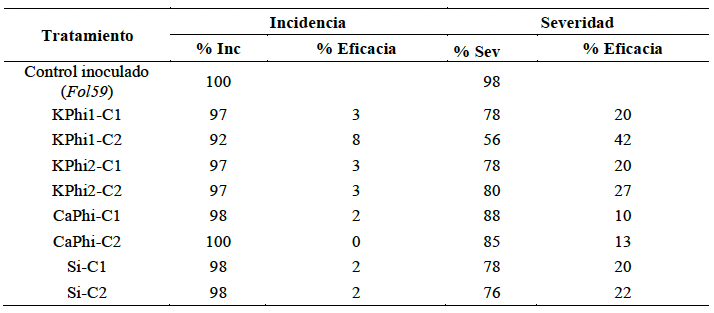
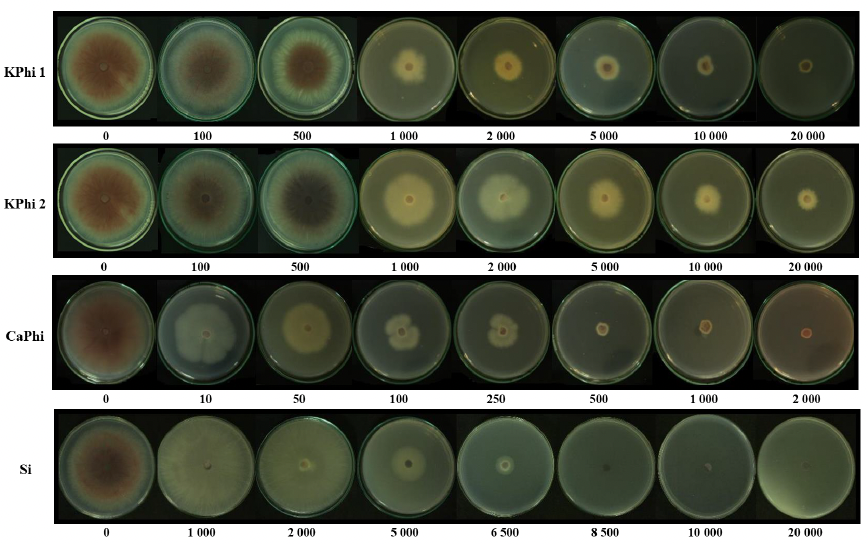
Results. After seven days, the bioactive substances reduced radial growth of the fungus between 70 and 100% with significant differences among the concentrations. The largest inhibition was registered with silicon at 10 000 ppm (100%) followed by calcium phosphite at 2 000 ppm (99%). Fourteen days post inoculation, in in planta assays, the control showed 100% incidence and 98% severity. However, the potassium phosphite treatment (KPhi1) at 2 000 ppm reduced severity to 56%, which represents a 42% efficacy against the control.
Conclusion. Phosphites and silicon showed inhibitory effect on mycelial growth of the fungus under in vitro conditions. In in planta assays, potassium phosphite at 2 000 ppm was the most effective treatment, reducing the severity of vascular wilt of tomato caused by Fol59.
Keywords: Bioactive substances, Induced resistance, In vitro inhibition, Management, Soilborne pathogens