Click on the cite to copy
-
Or Copy link



Article filters
Search Papers:
Identification of molecular markers associated with resistance genes to Puccinia triticina
By Yérica Renata Valdez Rodríguez, Julio Huerta Espino, Luis Antonio Mariscal Amaro*, Héctor Eduardo Villaseñor Mir, Elizabeth García León, Eliel Martínez Cruz
*Corresponding Author.
Received: 01/May/2024 – Published:
27/August/2025
DOI:
https://doi.org/10.18781/R.MEX.FIT.2405-4
-
Or Copy link
Abstract Background/Objective. Wheat is affected by Puccinia triticina, which causes leaf rust, with yield losses exceeding 80% in susceptible varieties. The most viable strategy for managing the disease is the use of varieties with partial resistance, which is expressed with low severity intensity. This requires parents with genes that confer this type of resistance, so wheat materials must be analyzed with molecular markers associated with these genes.
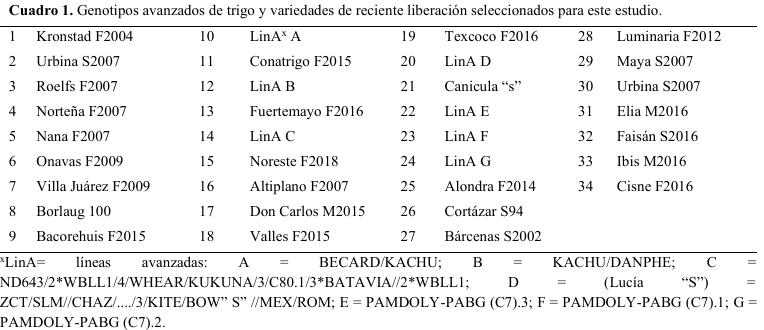
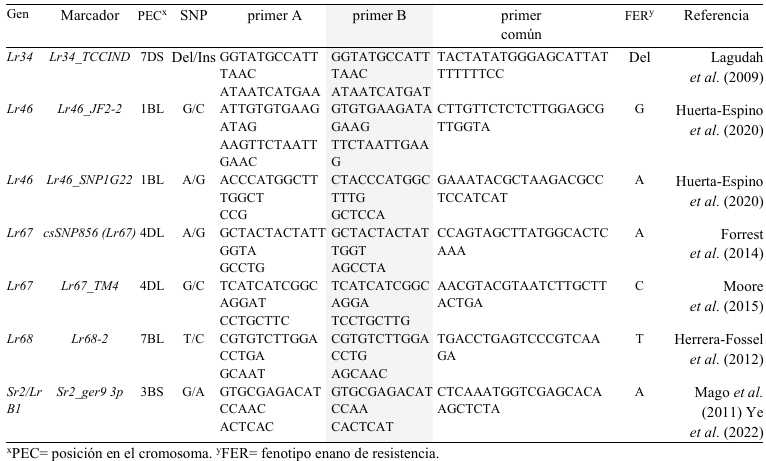
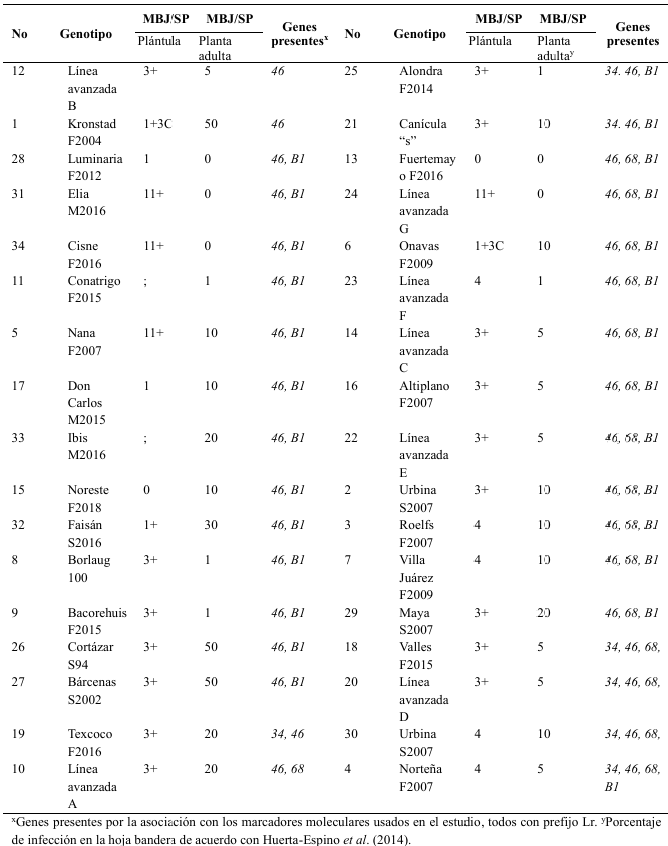
Materials and Methods. In this study, the presence of these markers was determined in advanced wheat lines and recently released varieties. Thirty-four genotypes were evaluated against leaf rust at seedling and adult plant stages, assessing disease severity. Different molecular markers were used to determine the presence of resistance alleles for five genes.
Results. Of the genes analyzed with the markers, Lr34, Lr46, Lr68, and LrB1 were identified. These genes were found alone and in combinations, with lower levels of the disease observed in genotypes with a higher number of these genes.
Conclusion. The use of molecular markers associated with these genes will facilitate the selection of wheat genotypes that can be included in future crossing plans.
Keywords: Triticum aestivum, Rust, Parcial resistance, Slow-rusting