Click on the cite to copy
-
Or Copy link


Article filters
Search Papers:
In vitro antifungal activity and phytochemical characterization of aqueous extracts from Datura discolor
By Diana Angelina Urias Lugo, Gabriela López Angulo, Octavio Ernesto Martínez Ereva, Sylvia Paz Díaz Camacho, Carlos Ramiro Ibarra Sarmiento, Luis Gerardo Sarmiento López, Laura Aracely Contreras Angulo, Guadalupe Arlene Mora Romero*
*Corresponding Author.
Received: 28/February/2025 – Published:
22/July/2025
DOI:
https://doi.org/10.18781/R.MEX.FIT.2502-2
-
Or Copy link
Abstract Background/Objective. Sclerotium rolfsii and Sclerotinia sclerotiorum are phytopathogenic fungi of agricultural significance. The use of phytoextracts with antifungal properties offers an alternative approach to reduce agrochemical applications in pathogen management. This study reports the phytochemical characterization of Datura discolor aqueous extracts obtained by infusion and High-Pressure Processing (HPP), as well as their antifungal evaluation.
Materials and Methods. Aqueous extracts from the root, stem, seed, and leaf of Datura discolor (2, 4, and 6 % w/v) were obtained by infusion HPP. Phytochemical analysis was conducted through screening tests and quantification of total metabolites using colorimetric assays. The antifungal activity of the extracts obtained by infusion was determined based on the in vitro inhibition percentage of the pathogens.
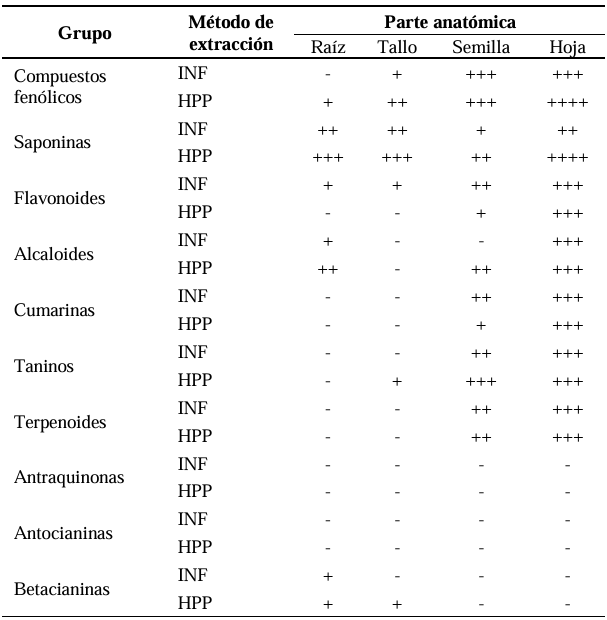
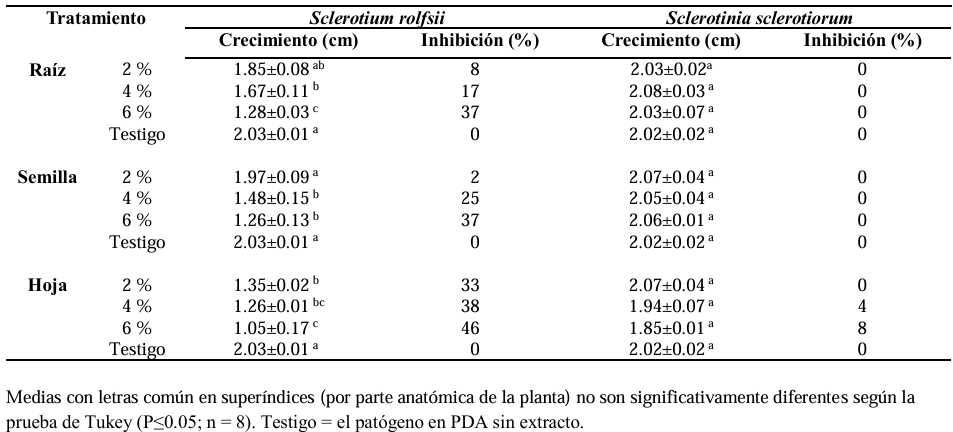
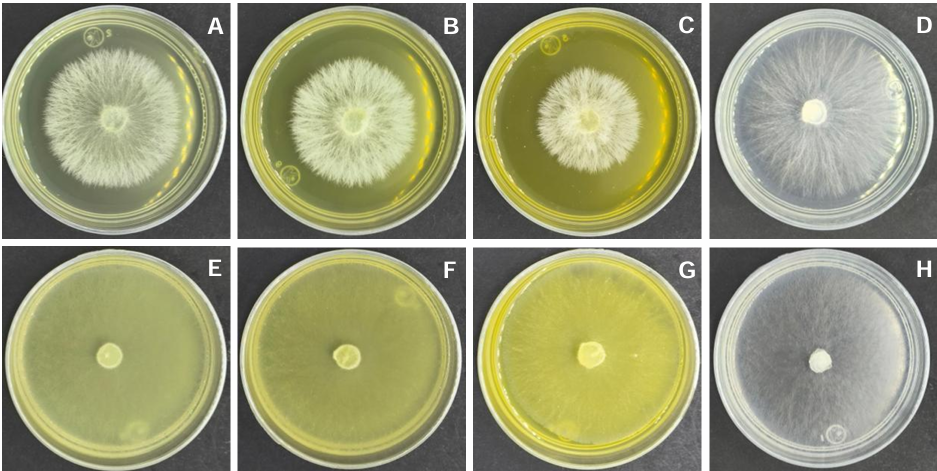
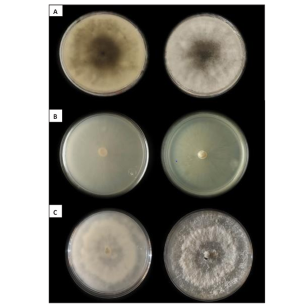
Results. Total phenolics and saponins content in root, stem, and leaf was higher in extracts obtained by HPP, whereas infusion showed greater values in the seed. Flavonoids were observed only in leaf extracts obtained by HPP. Alkaloid content was similar both infusion and HPP extracts. Phenols, saponins, flavonoids, alkaloids, tannins, terpenoids, coumarins, and betacyanins were detected, while anthraquinones and anthocyanins were not. The extracts inhibited Sclerotium rolfsii by 2 to 46 % but showed no effect on Sclerotinia sclerotiorum.
Conclusion. The results indicate that phenolic compounds and flavonoids contribute to the antifungal activity against the evaluated phytopathogens; the involvement of other non-analyzed compounds cannot be ruled out. Further studies under greenhouse conditions are required, applying the extracts either as foliar spray or soil treatment.
Keywords: Thorn apple, Plant Extract, Metabolites, Fungi