Click on the cite to copy
-
Or Copy link

Article filters
Search Papers:
Postharvest control of mycotoxigenic phytopathogens in maize: Conventional methods and natural alternatives
By Estefanía Martínez Batista, Surelys Ramos Bell, Edson Rayón Díaz, Gerónimo Díaz Cayetano, Cyndia González Arias, Juan Antonio Herrera González, Javier Ireta Moreno, Porfirio Gutiérrez Martínez*
*Corresponding Author.
Received: 17/March/2025 – Published:
27/November/2025
DOI:
https://doi.org/10.18781/R.MEX.FIT.2503-2
-
Or Copy link
Abstract Justification. Seeds are the fundamental input for agriculture and food production. Recently, an increase in the demand for maize grain production has been observed; however, annual postharvest losses range between 10 and 40%. The objective of this review is to present the main mycotoxin-producing fungi (genera/species) associated with maize grain during storage, as well as to analyze the conventional control methods and natural alternatives that have been applied to date.
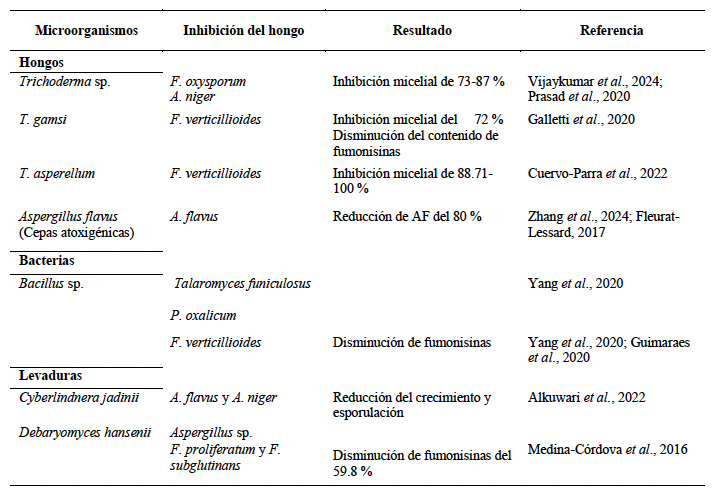
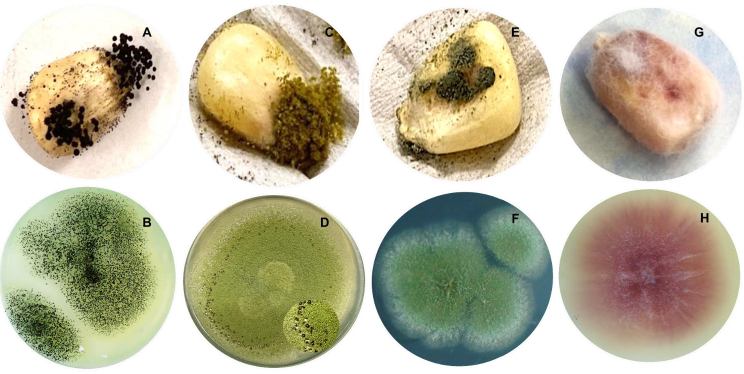
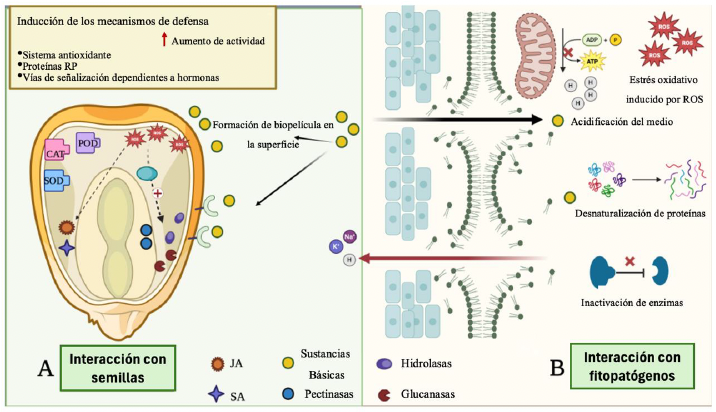
Theoretical and Experimental framework. Bibliographic information was compiled on the main fungal pathogens that develop in maize grain and the most commonly employed control methods. The principal fungal genera detected in maize grain are Aspergillus, Penicillium and Fusarium, all of which are important mycotoxin-producing fungi. Traditional physical and chemical control methods have been used; however, their application often fails to guarantee effectiveness and biosafety. The use of natural alternatives, as well as their combination, has shown positive effects in controlling these phytopathogens and inhibiting mycotoxin production.
Conclusions and Perspectives. One of the main causes of losses and quality deterioration in maize grain is the development of mycotoxin-producing fungi and, consequently, the generation of highly toxic secondary metabolites. To prevent the deterioration of store grain, traditional practices have been employed, such as grain cleaning, aeration at low temperatures, and the use of physical and chemical treatments (synthetic fungicides). Currently, the development of eco-friendly alternatives is one of the primary goals to reduce the use of agrochemicals on seeds and grains, in order to promote more sustainable agricultural systems.
Keywords: Maize, Fungi, Mycotoxins, Storage, Alternative control