Click on the cite to copy
-
Or Copy link




Article filters
Search Papers:
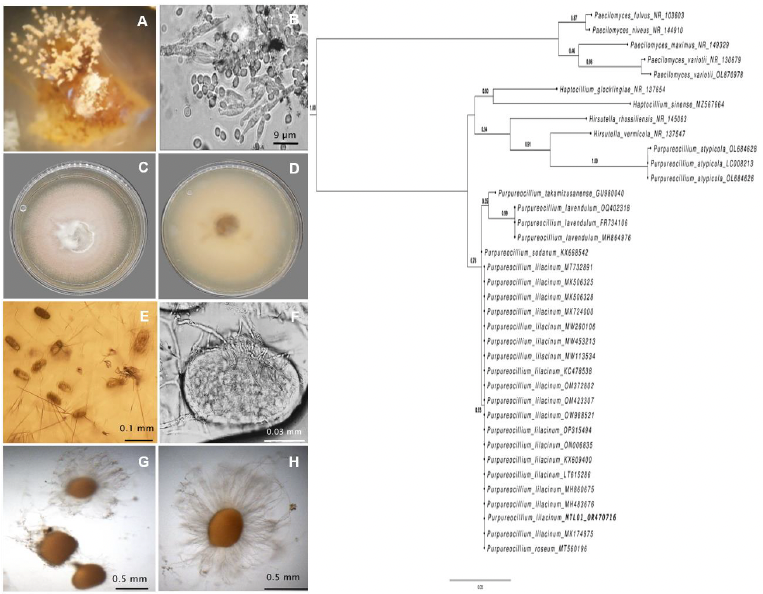
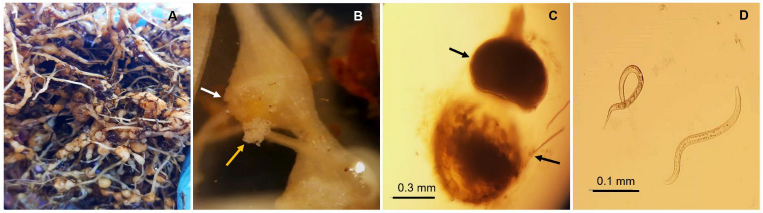
Use of Purpureocillium lilacinum MTL01 and Bacillus velezensis 83 to reduce galling by Meloidogyne enterolobii and improve flowering in tomato
By Elena Lugo García, Alejandro Salinas Castro, Gandhi Landa Cadena, Claudia Martínez Anaya, Irán Tapia Vázquez*
*Corresponding Author.
Received: 07/May/2026 – Published:
25/August/2026
DOI:
https://doi.org/10.18781/R.MEX.FIT.2505-3
-
Or Copy link
Abstract Background/Objective. The aim of this study was to determine the combined effect of an environmental strain of Purpureocillium lilacinum (MTL01) together with Bacillus velezensis 83, upon infection by the root-knot nematode Meloidogyne enterolobii.
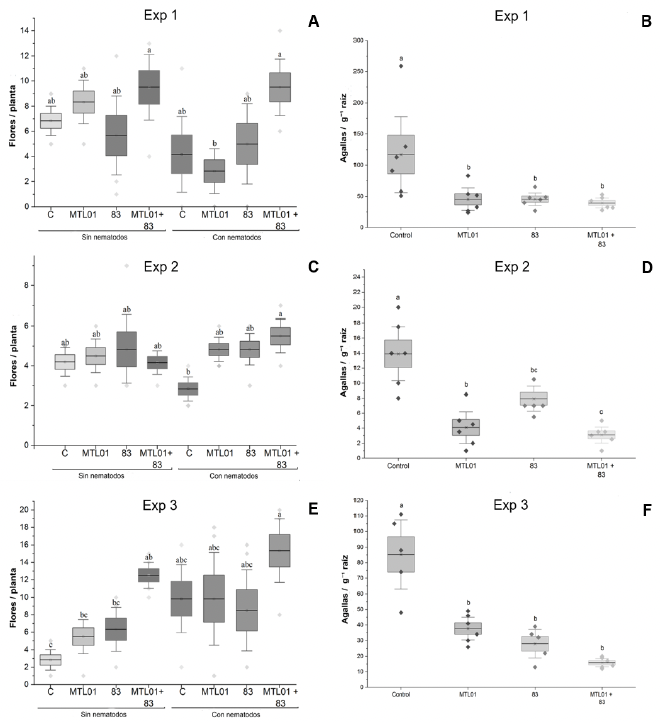
Experimental development. Three greenhouse experiments were conducted at different times (July–October 2022, February–June 2023, and September 2024–January 2025). In each experiment, treatments included uninoculated controls, plants inoculated only with P. lilacinum MTL01, with B. velezensis 83 only, or with both microorganisms, with and without nematode infection. Certified tomato seeds were inoculated with MTL01 spores or solution as a control and transplanted after germination. B. velezensis 83 was inoculated one week later, followed by two additional applications. Nematodes were introduced three weeks after transplanting, and plants were subsequently maintained in a greenhouse for an additional eight weeks. At harvest, growth parameters and infection levels were quantified (biomass, length, number of flowers, root weight, number of galls, and galling index).
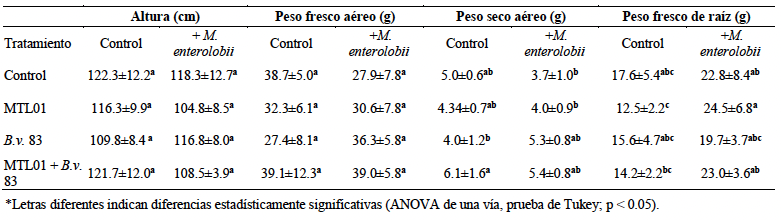
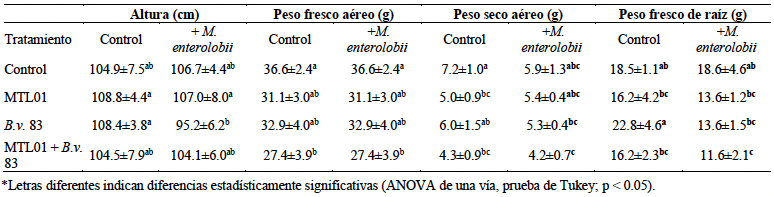
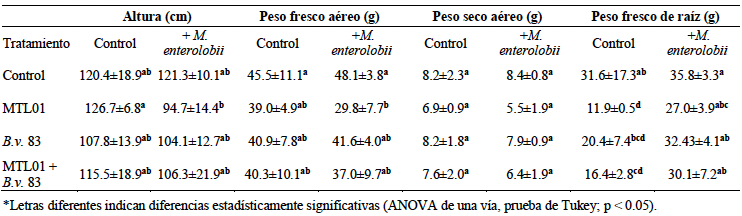
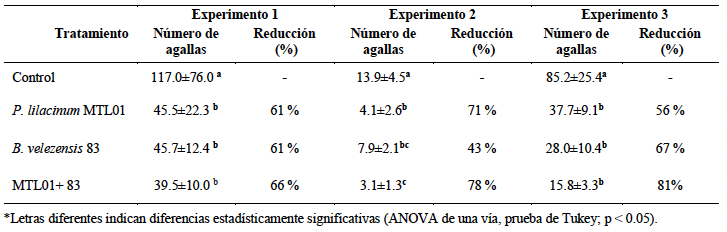
Results. Data of vegetative growth varied among experiments, with no clear evidence of effects associated with microbial inoculation. However, the combination of P. lilacinum MTL01 and B. velezensis 83 showed reproducible results, reducing gall formation caused by M. enterolobii by more than 60% and promoting a consistent tendency toward increased flowering relative to nematode-infested control plants. These results demonstrate the potential of using combined microorganisms to improve tomato performance under greenhouse conditions.
Conclusion. Our findings highlight the importance of mitigating M. enterolobii infection in tomato using a combination of microorganisms, not only to control nematode populations but also to increase flower yield by up to 4.3-fold (Experiment 3) in plants without nematodes, and 1.6-fold in the presence of M. enterolobii. This represents a promising strategy; however, further research is needed to confirm its safety and optimize its application under real agricultural conditions.
Keywords: Fungus, Bacterium, Nematode, Biocontrol, Phenology