RMF Logo

Article filters

Search Papers:

For searching before 2024 see Archive (2000-2023)
  • Vol. 2026, 44(2)
  • Scientific Article

Pantoea vagans, causal agent of stem rot in pitahaya (Selenicereus undatus, syn. Hylocereus undatus) in Puebla, Mexico

By Edith Luna Martínez, Sergio Aranda Ocampo*, Dimas Mejía Sánchez, Candelario Ortega Acosta, Manuel Livera Muñoz, Laura Delia Ortega Arenas, Antonio Mora Aguilera, Eligio Pérez Sosa, Daniel Telìz Ortiz

*Corresponding Author.

Received: 08/December/2025 – Published: 25/February/2026
DOI: https://doi.org/10.18781/R.MEX.FIT.2512-3

  • PDF
  • HTML
  • XML

Abstract Background/Objective. The cultivation of pitahaya (Selenicereus undatus) has expanded in recent years in Mexico. In 2023, symptoms of stem rot were observed in commercial pitahaya orchards in the state of Puebla. The objective was to characterize and identify the causal agent of stem rot, evaluate the pathogenicity of the causal agent in different pitahaya species as well as other plant species, and assess its in vitro sensitivity to commercial bactericide formulations.

Materials and Methods. Ten rotten stems from Huitziltepec, Puebla, were analyzed. Tissue samples from each stem were disinfected and macerated in 500 μL of sterile distilled water; from there, 100 μL were seeded in Wilbrink's and King's B culture media. From the bacterial growth, strain CPHU23 was biochemically characterized and identified by multilocus sequence analysis (MLSA) and phylogenetic analysis of the rpoB, gyrB, leuS, and fusA genes. The pathogenicity of CPHU23 was evaluated by infiltration of 3 × 10⁸ CFU mL⁻¹ in five species of the genus Selenicereus: S. ocamponis, S. purpusi, Selenicereus sp. “Golden,” Selenicereus sp. “Solferina” and S. undatus, as well as in Agave cupreata, A. angustifolia, Aloe vera, Allium cepa, Solanum lycopersicum, and Capsicum annuum. In vitro sensitivity was determined by the disk diffusion method with 10 commercial bactericide formulations.

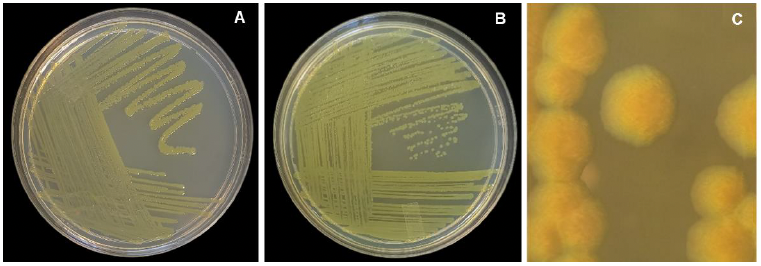
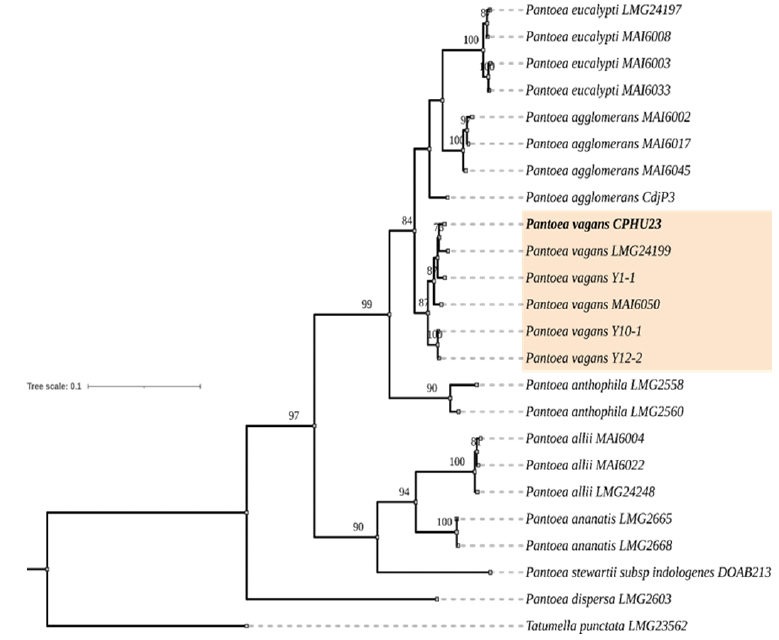
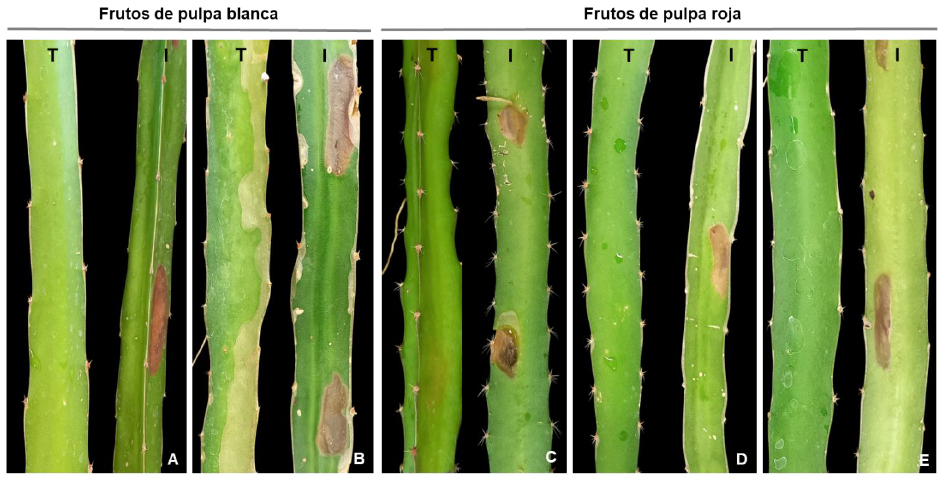
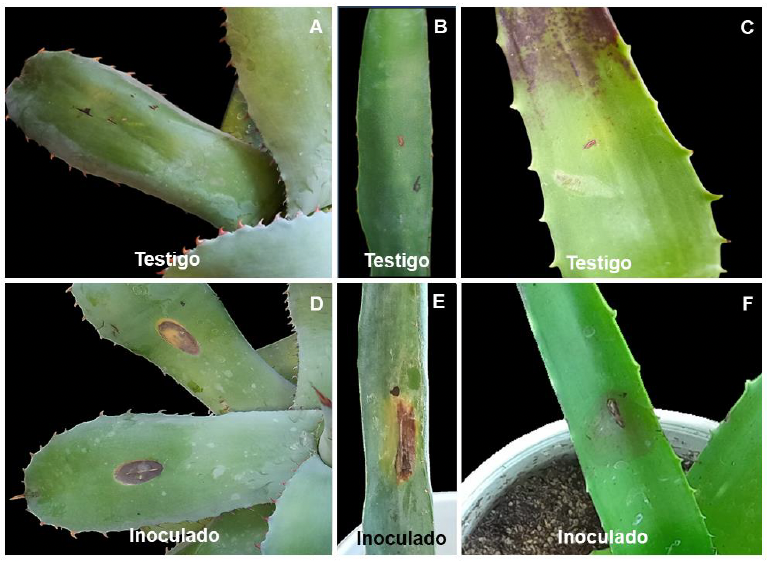
Results. Three bacterial morphotypes were isolated from the 10 stems. The CPHU23 morphotype was the most common, with yellow, round colonies with smooth edges and a mucoid appearance. Biochemical characterization of the CPHU23 strain showed 93% similarity to Pantoea vagans. MLSA analysis phylogenetically grouped the CPHU23 isolate within the Pantoea vagans clade, phylogenetically related to the type strains of P. vagans LMG 24199, YI-1, and MA I6050 with bootstrap support greater than 85%. Inoculation with P. vagans CPHU23 caused stem rot in the five species of the genus Selenicereus, in leaves of A. cupreata and A. vera, but not in bulbs of A. cepa and fruits of S. lycopersicum and C. annuum. Pantoea vagans CPHU23 was sensitive in vitro to copper oxychloride, gentamicin sulfate, oxytetracycline hydrochloride, and streptomycin, but resistant to kasugamycin.

Conclusion. Pantoea vagans is the causal agent of stem rot in pitahaya in Puebla. All five pitahaya varieties are susceptible to stem rot. Agave cupreata and Aloe vera could be potential hosts for P. vagans. The use of copper oxychloride may be an efficient management strategy for P. vagans in pitahaya cultivation in Mexico.

Keywords: Enterobacteriaceae, Dragon fruit, Etiology, Multilocus MLSA, Identification
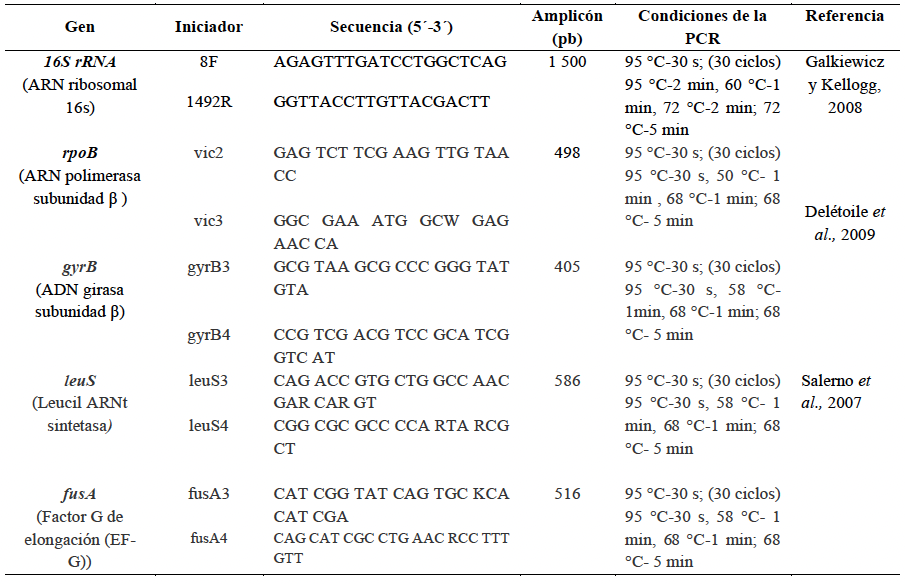
Table 1. Primers and PCR conditions used for multilocus identification of bacteria isolated from pitahaya stem rot symptom.
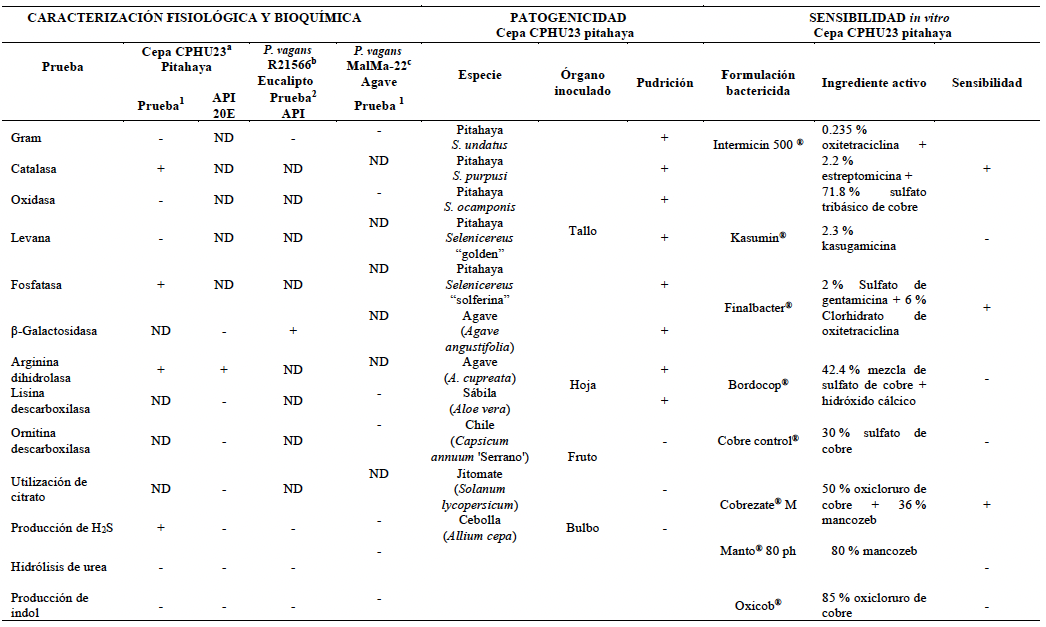
Table 2. Physiological and biochemical characterization, pathogenicity, and <em>in vitro</em> sensitivity to bactericides of <em>P. vagans</em> CPHU23 isolated from stem rot of <em>S. undatus</em>.
Table 2. Physiological and biochemical characterization, pathogenicity, and in vitro sensitivity to bactericides of P. vagans CPHU23 isolated from stem rot of S. undatus.
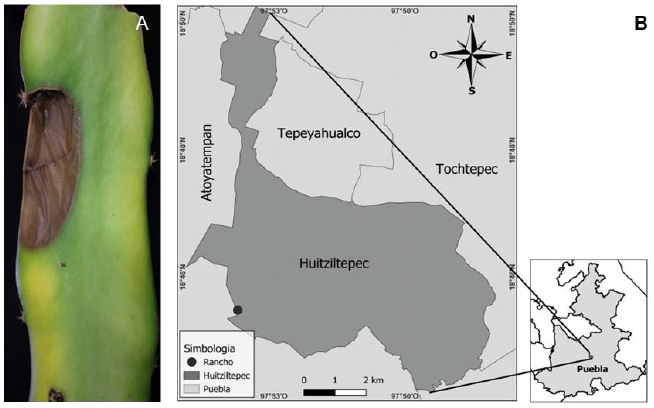
Figure 1. <strong>A</strong>) Symptom of rot on the stem of pitahaya (<em>Selenicereus undatus</em>) in a commercial orchard in the community of Santa Ana; <strong>B</strong>) Location of the orchard in the municipality of Huitziltepec, Puebla.
Figure 1. A) Symptom of rot on the stem of pitahaya (Selenicereus undatus) in a commercial orchard in the community of Santa Ana; B) Location of the orchard in the municipality of Huitziltepec, Puebla.
Figure 2. Morphology of bacterial colonies isolated from the stem of <em>Selenicereus undatus</em> with symptoms of rot. Strain CPHU23 on Wilbrink's medium (A) and King's medium (B, C) incubated at 28 °C for 72 h.
Figure 2. Morphology of bacterial colonies isolated from the stem of Selenicereus undatus with symptoms of rot. Strain CPHU23 on Wilbrink's medium (A) and King's medium (B, C) incubated at 28 °C for 72 h.
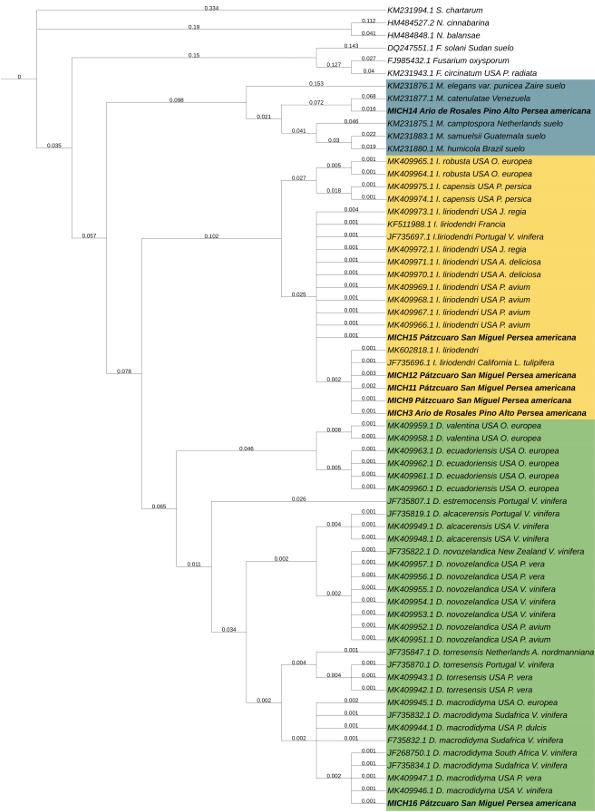
Figure 3. Maximum-likelihood phylogenetic tree based on the TIM2+I+G4 model, derived from the concatenation of four housekeeping genes (<em>fus</em>A, g<em>yr</em>B, <em>rpo</em>B, and <em>leu</em>S) from strains of the genus <em>Pantoea</em>. Ultrafast bootstrap values >70% (generated from 1000 replicates) are shown at branch nodes. <em>Tatumella punctata</em> LMG23562 was used as an outgroup. The strain CPHU23 isolated from S. undatus in this study is shown in bold.
Figure 3. Maximum-likelihood phylogenetic tree based on the TIM2+I+G4 model, derived from the concatenation of four housekeeping genes (fusA, gyrB, rpoB, and leuS) from strains of the genus Pantoea. Ultrafast bootstrap values >70% (generated from 1000 replicates) are shown at branch nodes. Tatumella punctata LMG23562 was used as an outgroup. The strain CPHU23 isolated from S. undatus in this study is shown in bold.
Figure 4. Rot in pitahaya stems inoculated by infiltration with a suspension containing 3 × 10⁸ CFU mL⁻¹ of <em>Pantoea vagans</em> CPHU23. A) <em>Selenicereus undatus</em>, B) <em>Selenicereus</em> sp. “Golden,” C) <em>Selenicereus purpusi</em>, D) <em>Selenicereus ocamponis</em>, and E) <em>Selenicereus</em> “Solferina”. T= control, I= inoculated.
Figure 4. Rot in pitahaya stems inoculated by infiltration with a suspension containing 3 × 10⁸ CFU mL⁻¹ of Pantoea vagans CPHU23. A) Selenicereus undatus, B) Selenicereus sp. “Golden,” C) Selenicereus purpusi, D) Selenicereus ocamponis, and E) Selenicereus “Solferina”. T= control, I= inoculated.
Figure 5. Leaf rot in D) <em>Aloe vera</em>, E) <em>Agave angustifolia</em>, and F) <em>Agave cupreata</em> inoculated by infiltration with a suspension containing 3 × 10⁸ CFU mL⁻¹ of <em>Pantoea vagans</em> CPHU23. A, B, and C = controls.
Figure 5. Leaf rot in D) Aloe vera, E) Agave angustifolia, and F) Agave cupreata inoculated by infiltration with a suspension containing 3 × 10⁸ CFU mL⁻¹ of Pantoea vagans CPHU23. A, B, and C = controls.