Click on the cite to copy
-
Or Copy link



Article filters
Search Papers:
Description of Coffea arabica materials and their tolerance to coffee leaf rust (Hemileia vastatrix) under conditions of Amatlán de los Reyes, Veracruz
By José Alan Reyes Pérez, Victorino Morales Ramos*, Ma. de Lourdes Catalina Arévalo Galarza, Dora Angélica Avalos de la Cruz
*Corresponding Author.
Received: 09/February/2026 – Published:
13/August/2026
DOI:
https://doi.org/10.18781/R.MEX.FIT.2602-2
-
Or Copy link
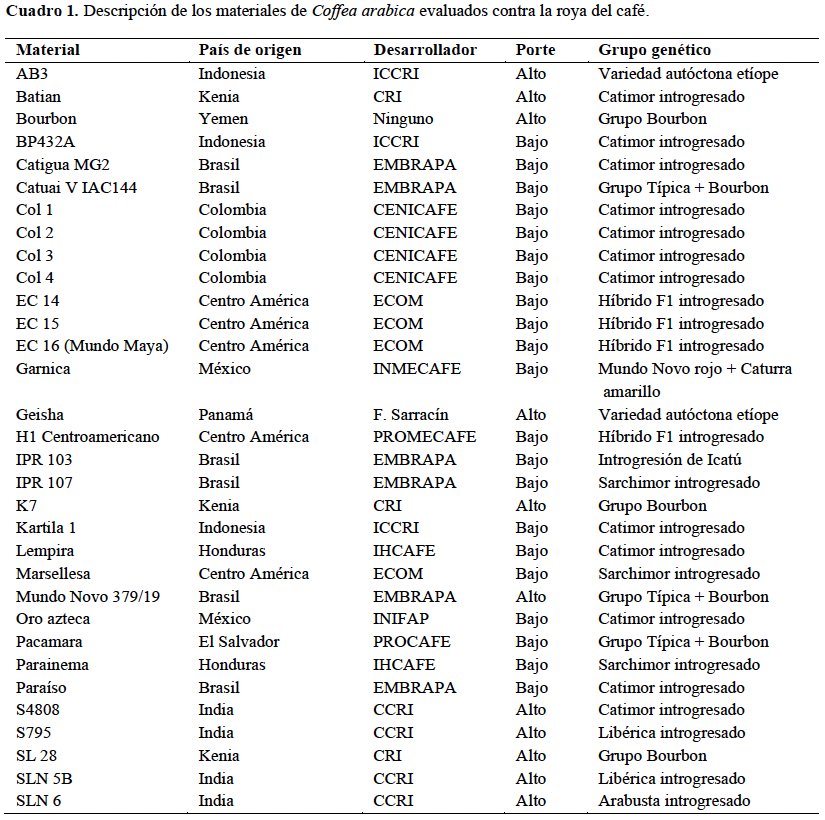
Abstract Backgrounds/Objective. Coffee cultivation is at risk due to the effects of climate change, which has created favorable conditions for the proliferation of diseases such as coffee leaf rust (Hemileia vastatrix). One of the most cost-effective and efficient control measures has been the use of materials that are tolerant or resistant to this fungus. The objective of this study was to analyze the response of 32 promising Coffea arabica accessions to coffee leaf rust and to describe their morphological characteristics, relating them to disease severity, under conditions prevailing in the municipality of Amatlán de los Reyes, Veracruz.
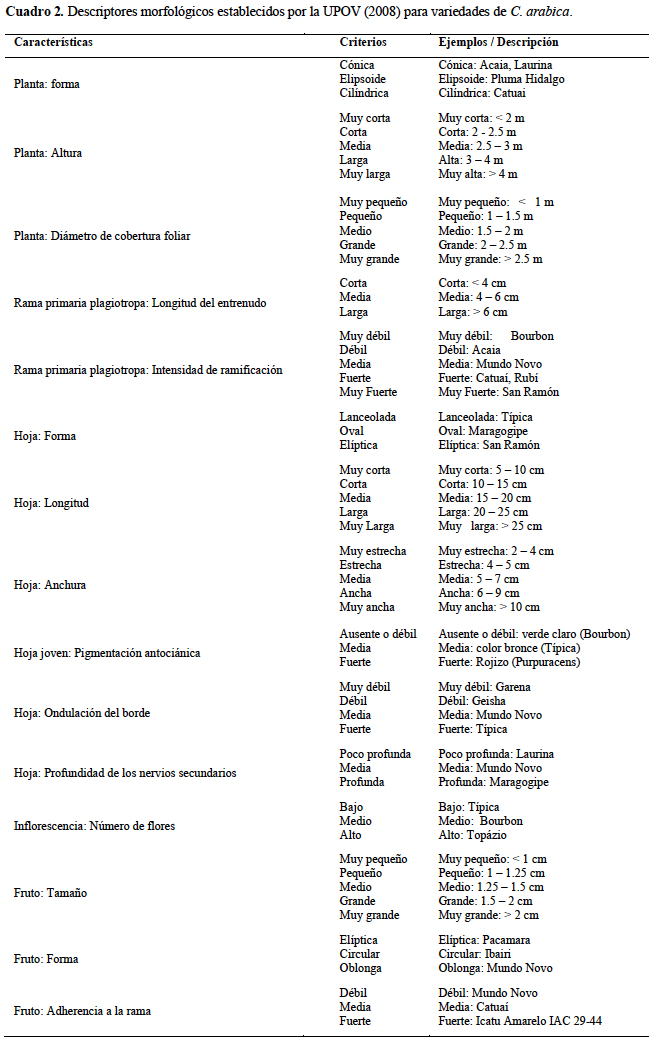
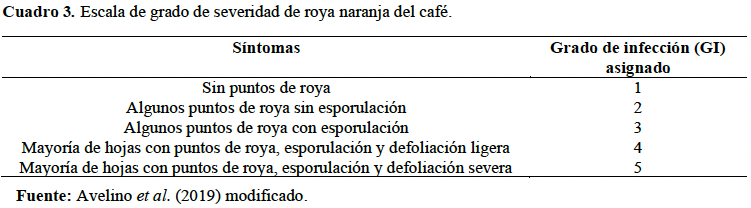
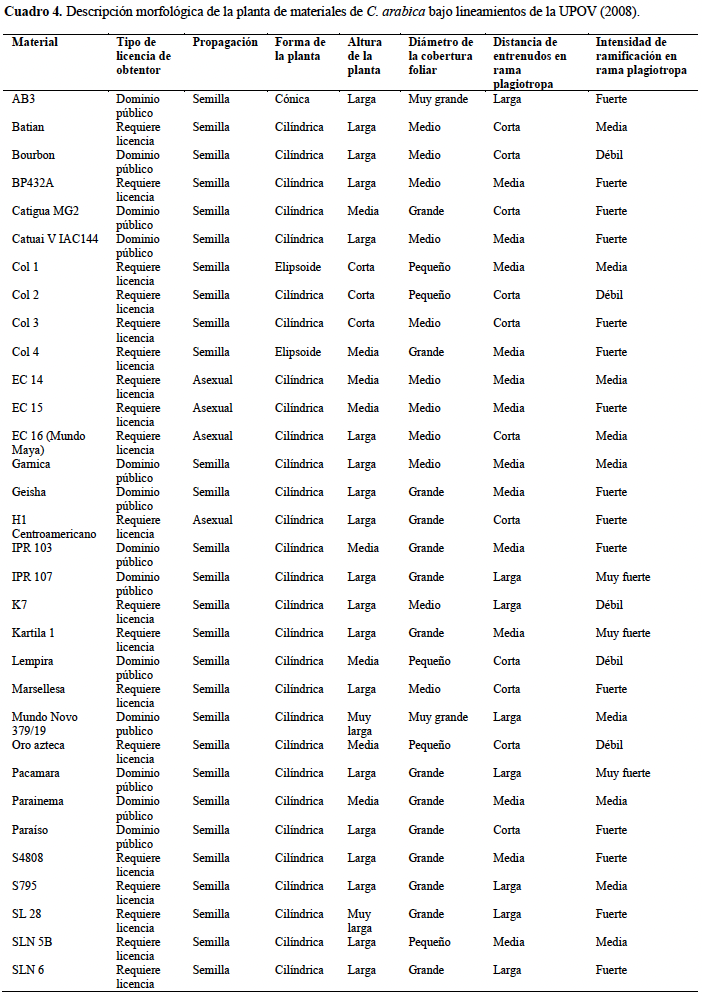
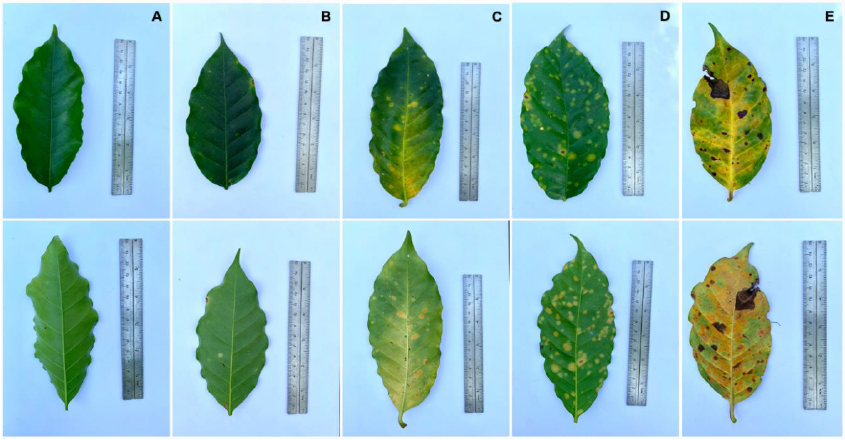
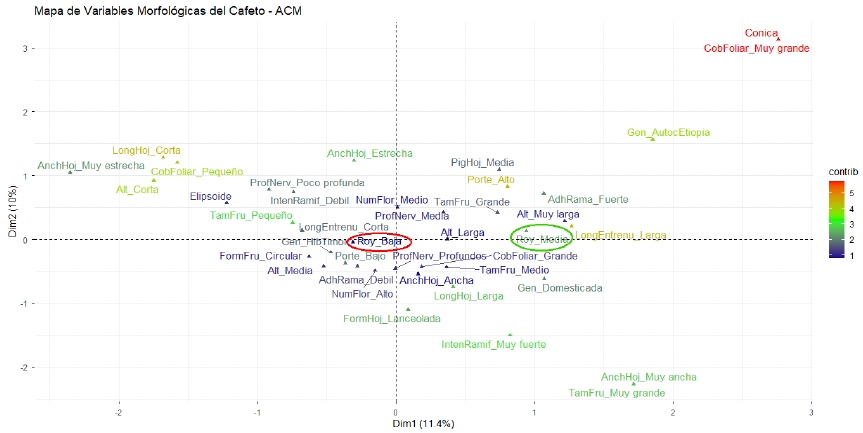
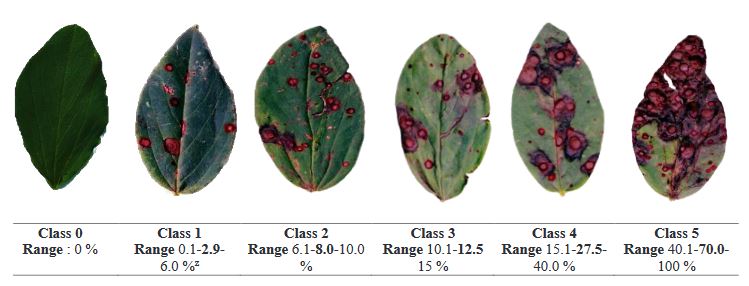
Experimental development. A total of 32 C. arabica accessions were evaluated in a completely randomized block design with three replications, compiling a descriptive profile of the visible, identifiable, and measurable morphological traits of each evaluated accession. The incidence of coffee leaf rust (Hemileia vastatrix) was assessed on a five-level severity scale on a monthly basis over a two-year period. An ordinal mixed-effects model and post hoc tests were computed to identify significant differences in rust incidence. Hierarchical cluster analysis was carried out to group the materials according to susceptibility or severity level, and the relationship between morphological traits and infestation level was analyzed using multiple correspondence analysis.
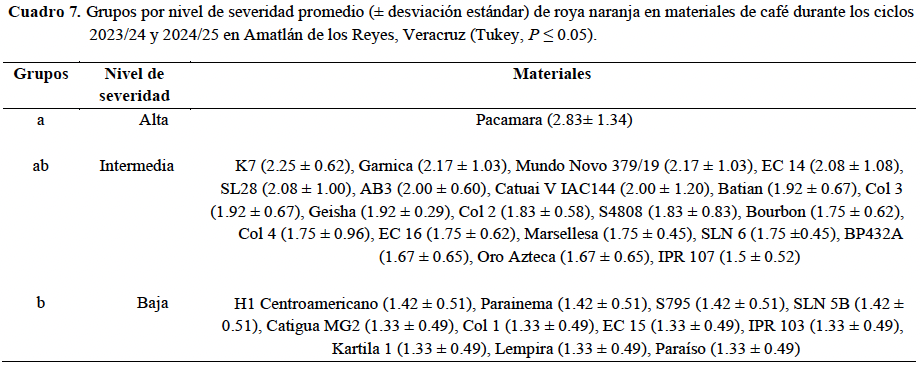
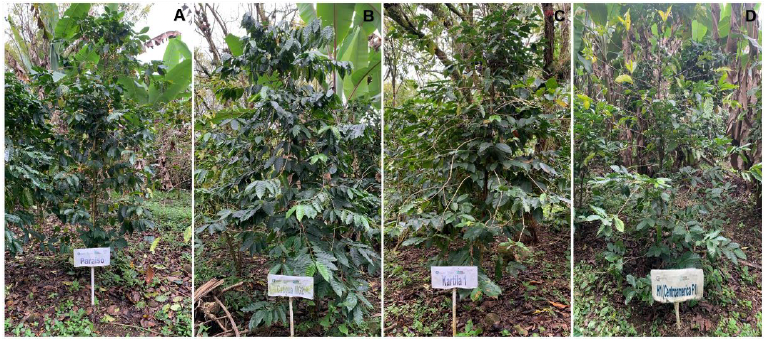
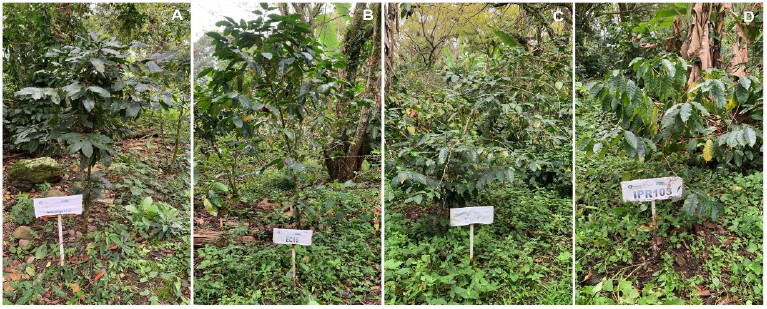
Results. The materials showed significant differences in tolerance to coffee leaf rust. Tukey's test (α = 0.05) identified three groups based on the severity of rust damage; the Pacamara variety was the most affected, while the H1 Centroamericano, Parainema, Catigua MG2, Col 1, EC 15, IPR 103, Kartila 1, Lempira, Paraíso, S795, and the Arabusta SLN 5B varieties were the least affected. The remaining varieties showed an intermediate severity of infestation.
Conclusion. Under the conditions prevailing at the experimental site of the Colegio de Postgraduados Campus Córdoba, 11 C. arabica materials showed a favorable response to the severity of Hemileia vastatrix (H1 Centroamericano, Parainema, Catigua MG2, Col 1, EC 15, IPR 103, Kartila 1, Lempira, Paraíso, S795, and the Arabusta SLN 5B). This contributes to the options available to coffee growers in terms of production and plant health management against coffee leaf rust.
Keywords: Coffee farming, Climate change, Plant health, Food security