Click on the cite to copy
-
Or Copy link



Article filters
Search Papers:
First detection of bell pepper endornavirus infecting bell pepper in Guanajuato, Mexico
By Ana Belen Duarte Cruz, Víctor Manuel Martín del Campo Soler, Kristian Stevens, Alfredo Diaz Lara*
*Corresponding Author.
Received: 25/May/2026 – Published:
21/August/2026
DOI:
https://doi.org/10.18781/R.MEX.FIT.2605-3
-
Or Copy link
Abstract Background/Objective. Bell pepper (Capsicum annuum) is one of the most important agricultural crops of Mexico. Globally, over 60 virus species have been reported infecting Capsicum spp., some of them are associated with significant losses in yield and quality. The objective of this report is to determine the presence of bell pepper endornavirus (BPEV, Alphaendornavirus capsici) in bell pepper crops in Guanajuato, Mexico.
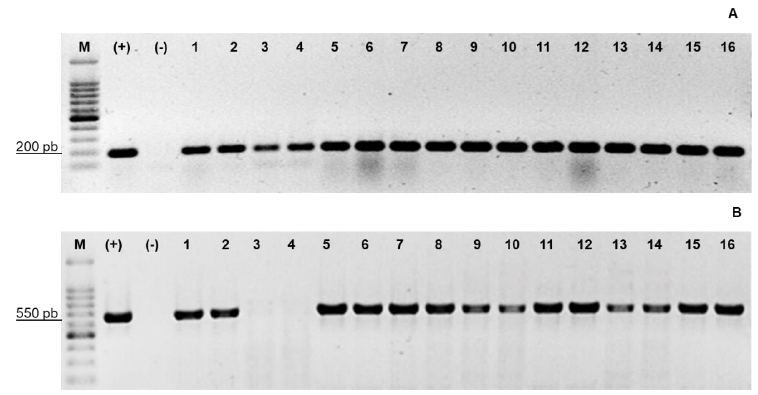
Experimental development. Samples of bell pepper plants were collected from a commercial greenhouse in Guanajuato, Mexico, in May 2024. A symptomatic plant (mosaic, leaf yellowing, and dwarfing symptoms) was analyzed by high throughput sequencing (HTS). Detection and identification were performed on individual samples using reverse transcription PCR (RT-PCR) and corroborated by Sanger sequencing. A phylogenetic analysis was conducted to investigate genetic diversity of the virus.
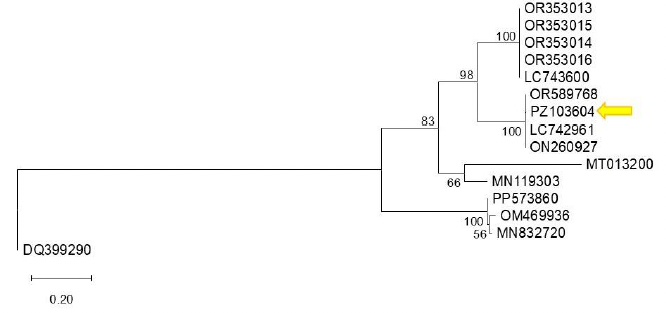
Results. A partial sequence of BPEV was generated by HTS and de novo assembly (GenBank: PZ103604), this virus was part of a mixed infection in the symptomatic plant, including Begomovirus capsicumhuastecoense (pepper huasteco yellow vein virus) and Cucumber mosaic virus. In addition, five bell pepper plants, including symptomatic and asymptomatic, tested positive for BPEV using RT-PCR, the identity of the virus was confirmed through Sanger sequencing and phylogenetic analysis.
Conclusion. The detection of BPEV in commercial bell pepper crops in Guanajuato highlights the importance of continuous monitoring of emerging viruses, including possible mixed infections with other viruses, and further studying their impact on crop health and productivity. Although BPEV was detected in symptomatic plants, the observed symptoms cannot be attributed to it as it was detected as part of a co-infection. To our knowledge, this is the first report of BPEV infecting bell pepper in Mexico.
Keywords: Alphaendornavirus, Bell pepper endornavirus, Detection, HTS, Bell pepper, Mexico